CASE STUDY · ENTERPRISE SAAS · HRTECH
We Engineered an
Enterprise HR Platform —
From Recruitment to Payroll
HROne is a multi-tenant HR technology platform engineered by LogicStack Software to bring recruitment, employee management, attendance, leave, payroll, performance, documents and workforce operations into one connected digital ecosystem.
This was not a template implementation or a collection of disconnected dashboards.
We engineered the platform architecture, backend APIs, role-based portals, business workflows, public website, security boundaries, testing infrastructure and mobile-ready foundation as one scalable product.
- 7Role-Based Dashboards
- Multi-TenantSaaS Architecture
- 855Backend Verification Cases
- 266/266Portal Regression Tests
- 100Desktop Lighthouse Performance
- Web + Mobile-ReadyAPI Architecture
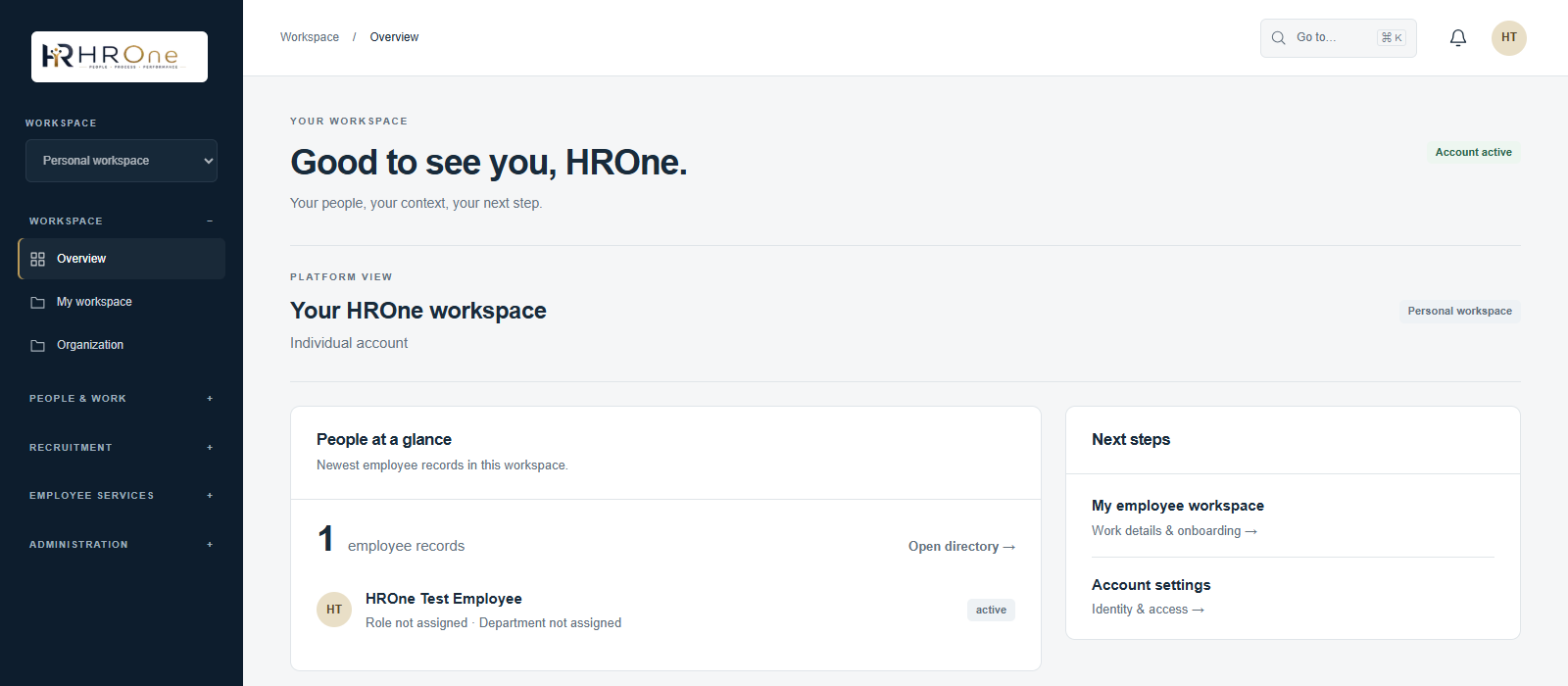
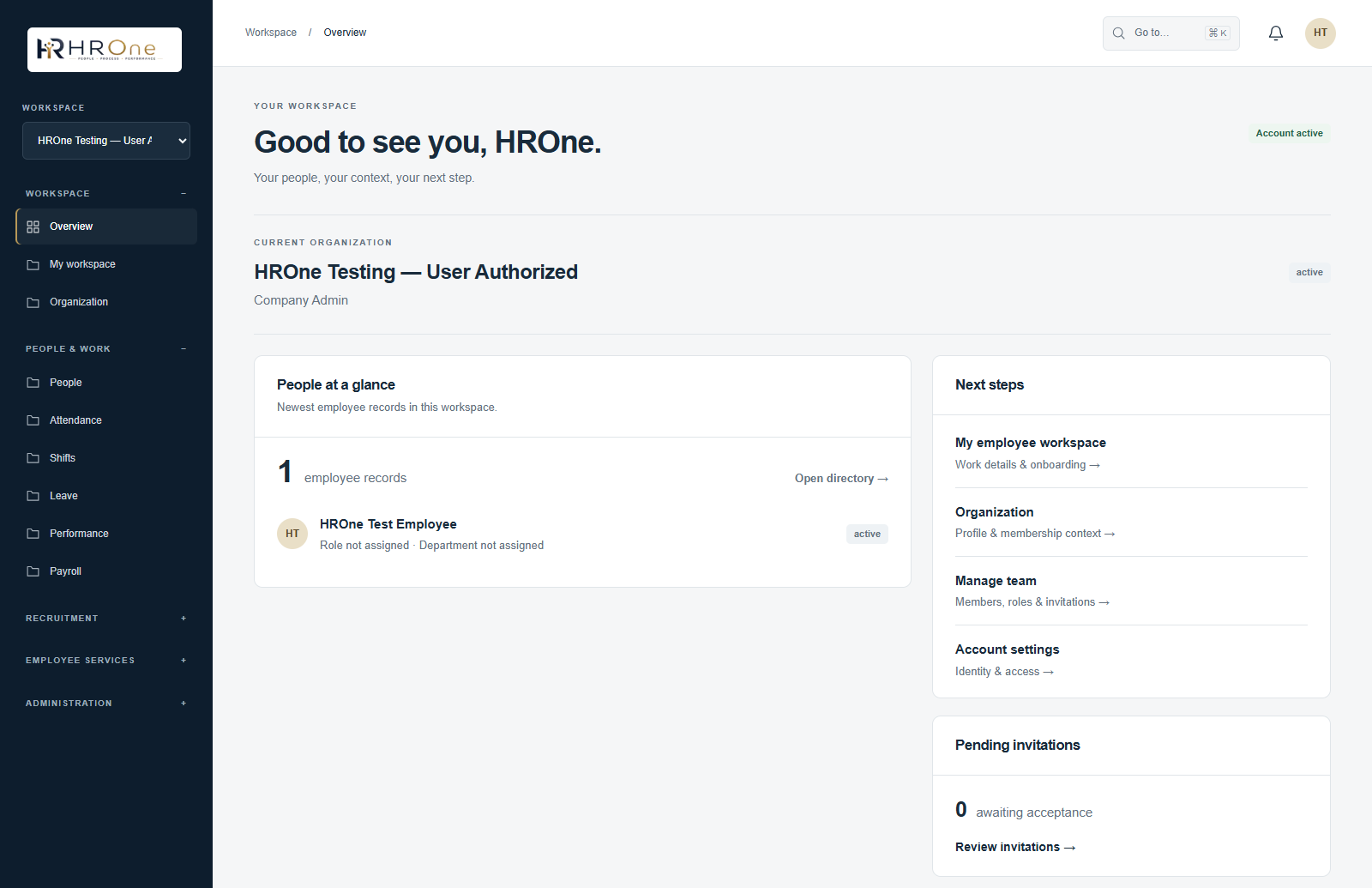
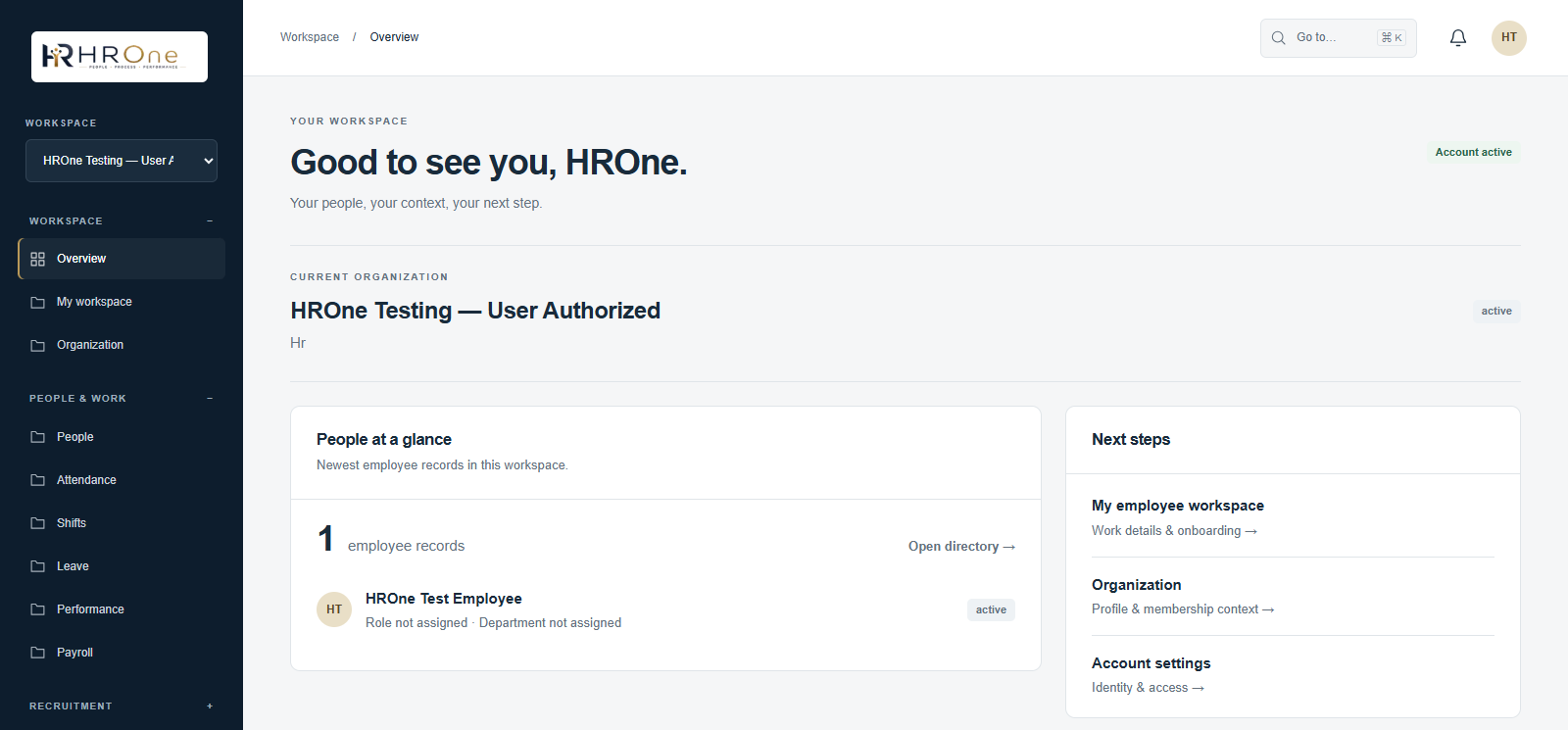
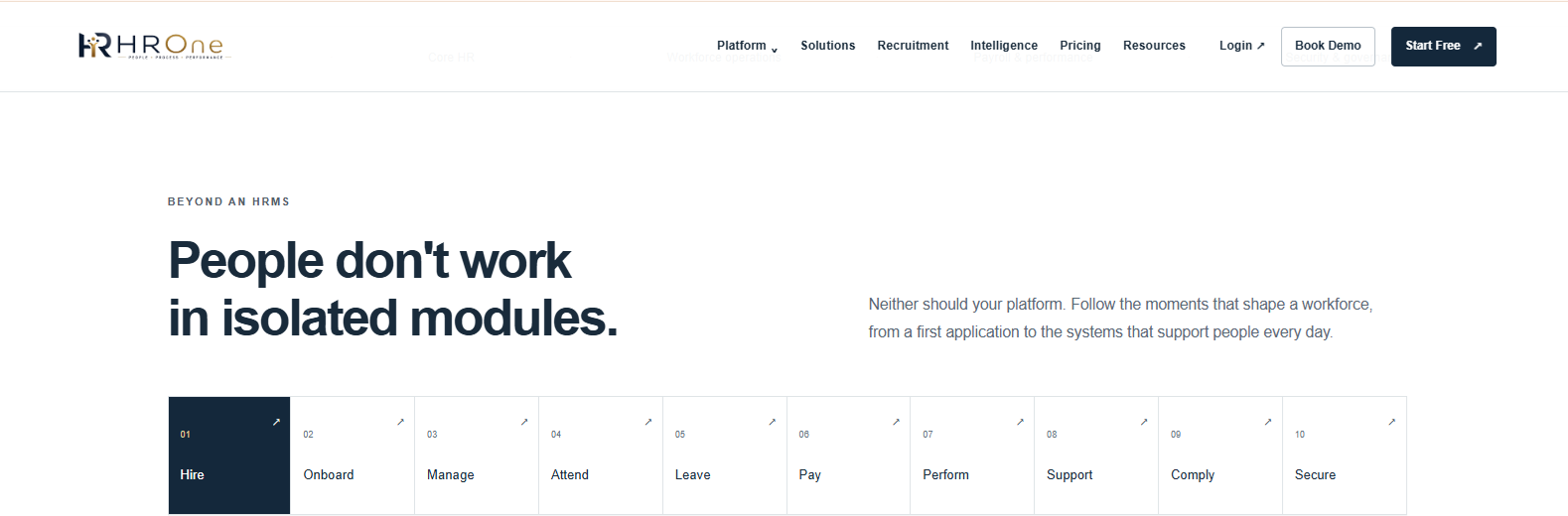
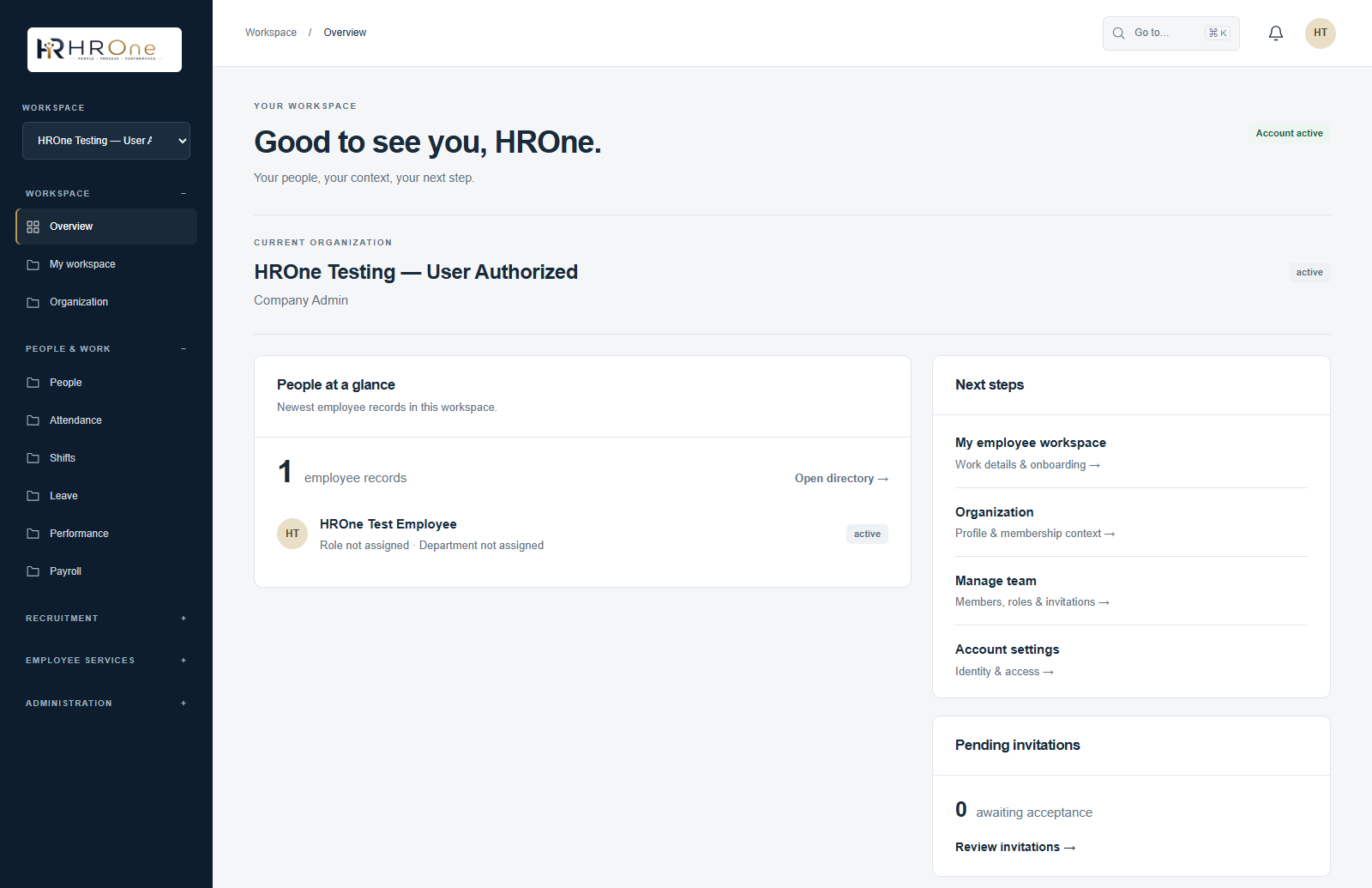
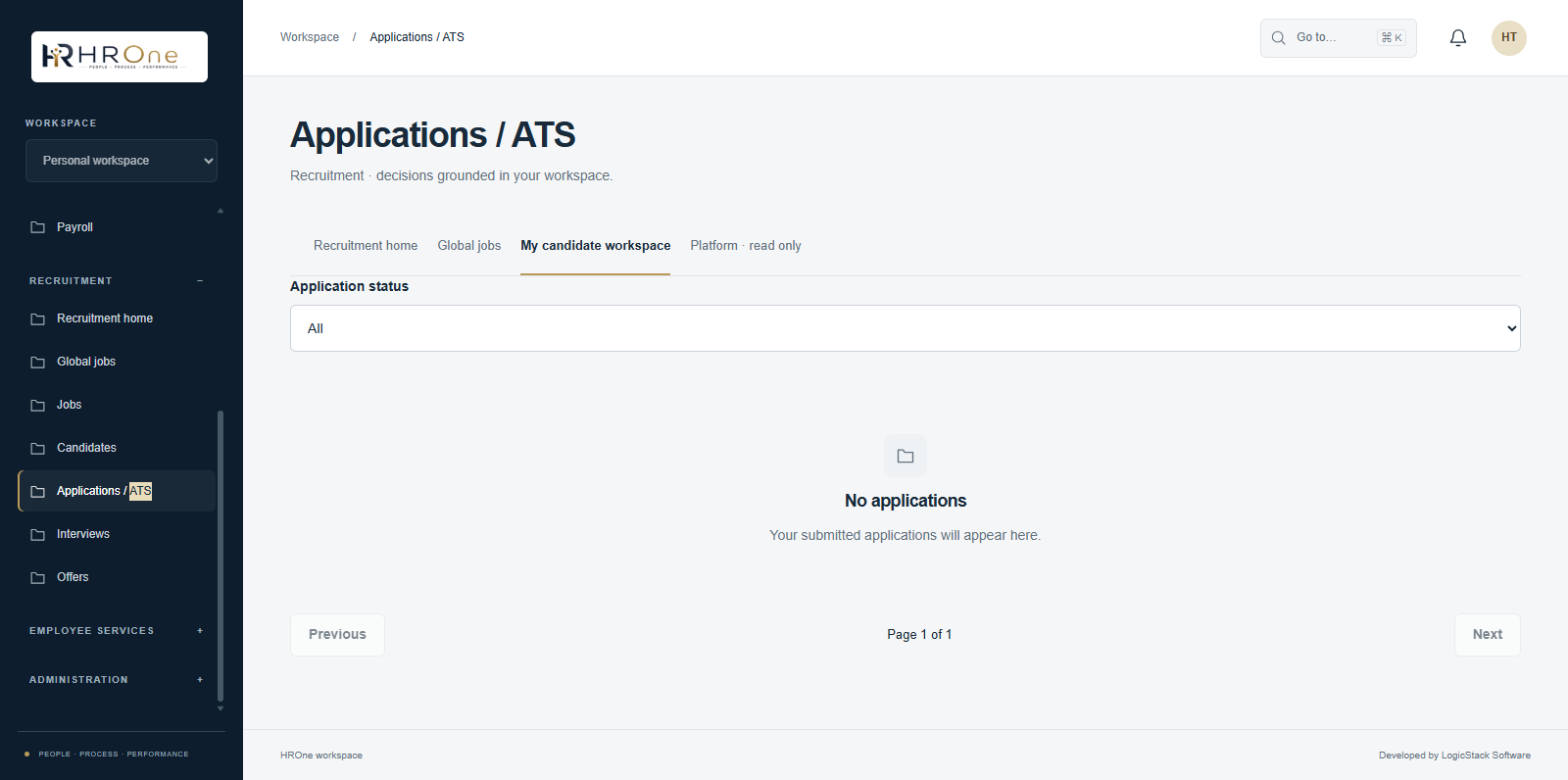
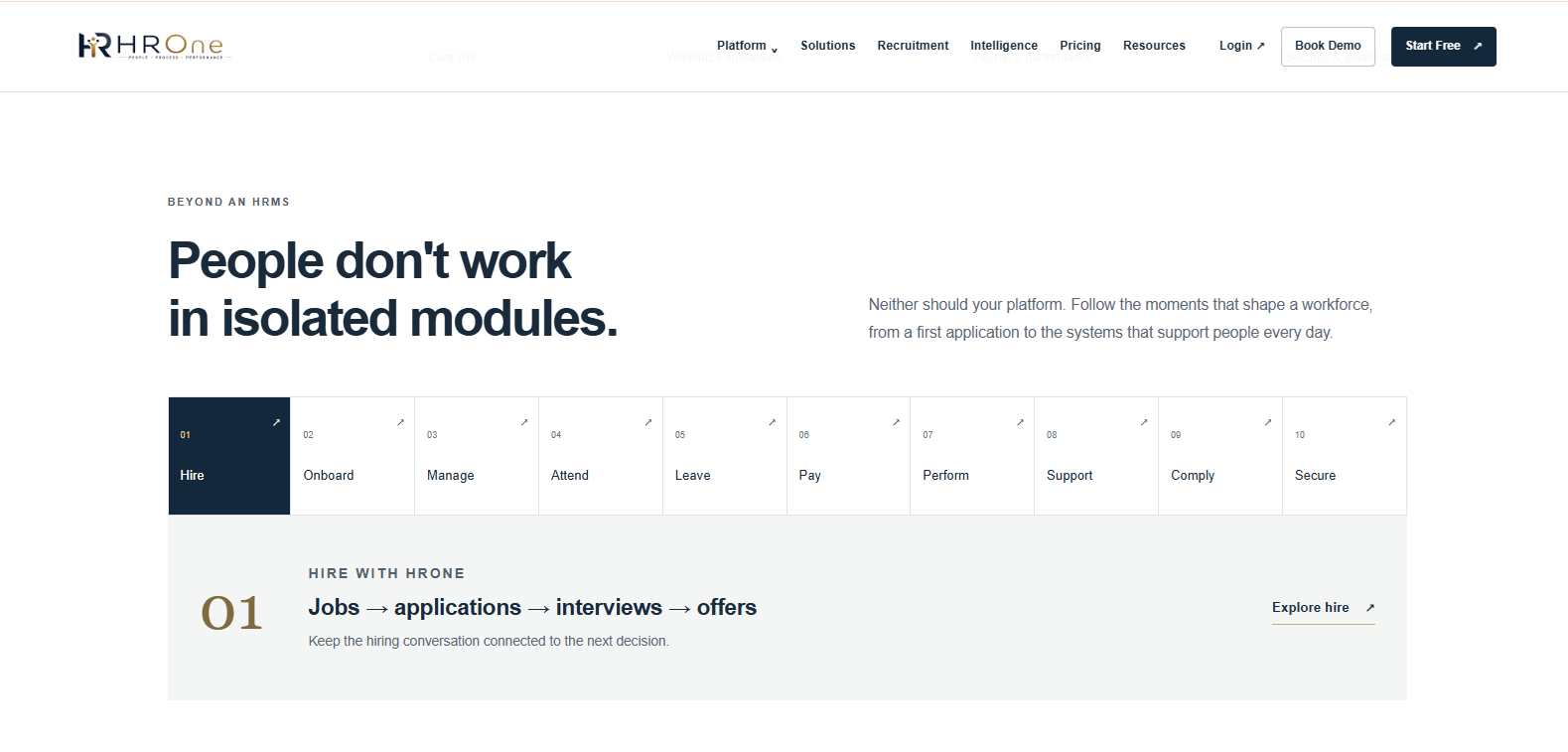
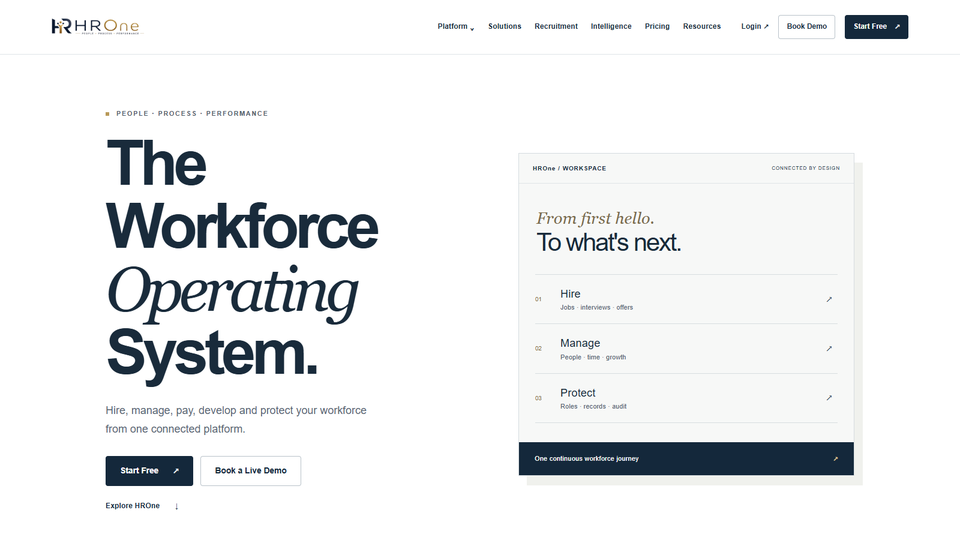
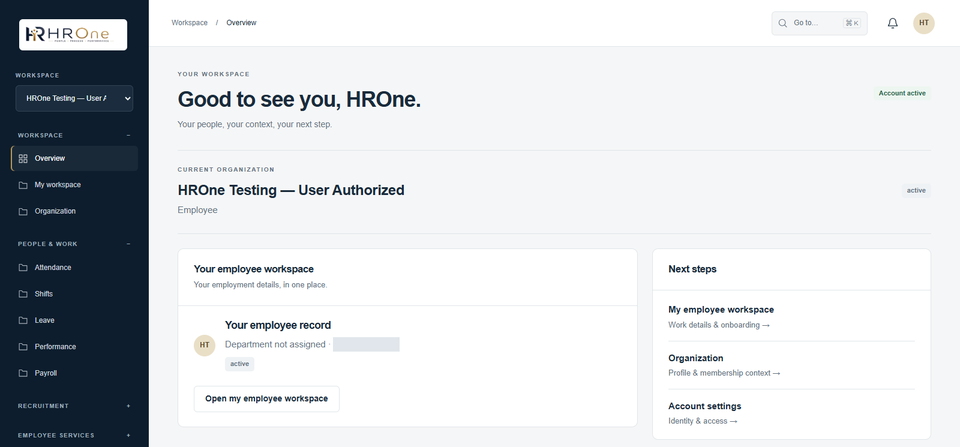
Real HROne product interface — designed and engineered by LogicStack Software.
THE PROJECT
More Than an HR Website.
A Complete Business Platform.
HROne was conceived as a connected HR and recruitment ecosystem capable of serving organizations, HR teams, recruiters, managers, finance teams and employees from a shared technology foundation.
The challenge was not simply to build screens.
The platform needed to support different users, permissions, organizations, workflows and sensitive workforce data without compromising scalability or maintainability.
That meant bringing recruitment, employee administration, attendance, leave, payroll and performance into one connected product. Each role needed a focused workspace, with access shaped around its responsibilities and the organization it belonged to.
LogicStack Software engineered the public website, application portals and backend APIs as parts of the same platform. Shared business workflows, document management and notifications formed the operational foundation, while an API-first architecture supported the mobile-ready direction.
WHAT WE BUILT
A Complete HR & Recruitment Ecosystem
From acquisition to operations, HROne brings all core workforce functions into a single, scalable platform — engineered end to end by LogicStack Software.
Public Product Website
A high-performance product and acquisition website designed around HROne's services, product capabilities and conversion journeys.
Enterprise Web Application
A dedicated application environment for organizations and their teams.
Recruitment & ATS
Jobs, candidates, applications, pipeline management, interviews and offers.
HRMS
Employee records and day-to-day workforce administration.
Attendance & Leave
Employee attendance and leave-management workflows.
Payroll
Payroll-oriented workforce and finance operations.
Performance Management
Structured employee performance workflows.
Documents
Workforce document-management capabilities.
HR Requests
Internal HR service/request workflows.
Commercial Layer
Commercial and subscription-oriented product foundations.
Notifications
Platform notification infrastructure supporting business workflows.
Mobile Architecture
An API-first foundation designed to support HROne's Flutter mobile application without rebuilding the business backend.
THE ENGINEERING CHALLENGE
One Platform. Multiple Organizations. Multiple Roles. Different Responsibilities.
Enterprise software becomes difficult when every user should not see or control the same data.
HROne required a permission-driven architecture where platform administrators, organization administrators, HR professionals, recruiters, finance teams, managers and employees could operate from the same ecosystem while maintaining clear boundaries.
We therefore engineered HROne around:
Multi-tenant organization architecture
Organization-level data isolation
Role-based access control
Permission-driven actions
Protected application routes
Ownership authorization
Structured API contracts
Scalable business modules
Reusable authentication foundation
Mobile-consumable APIs
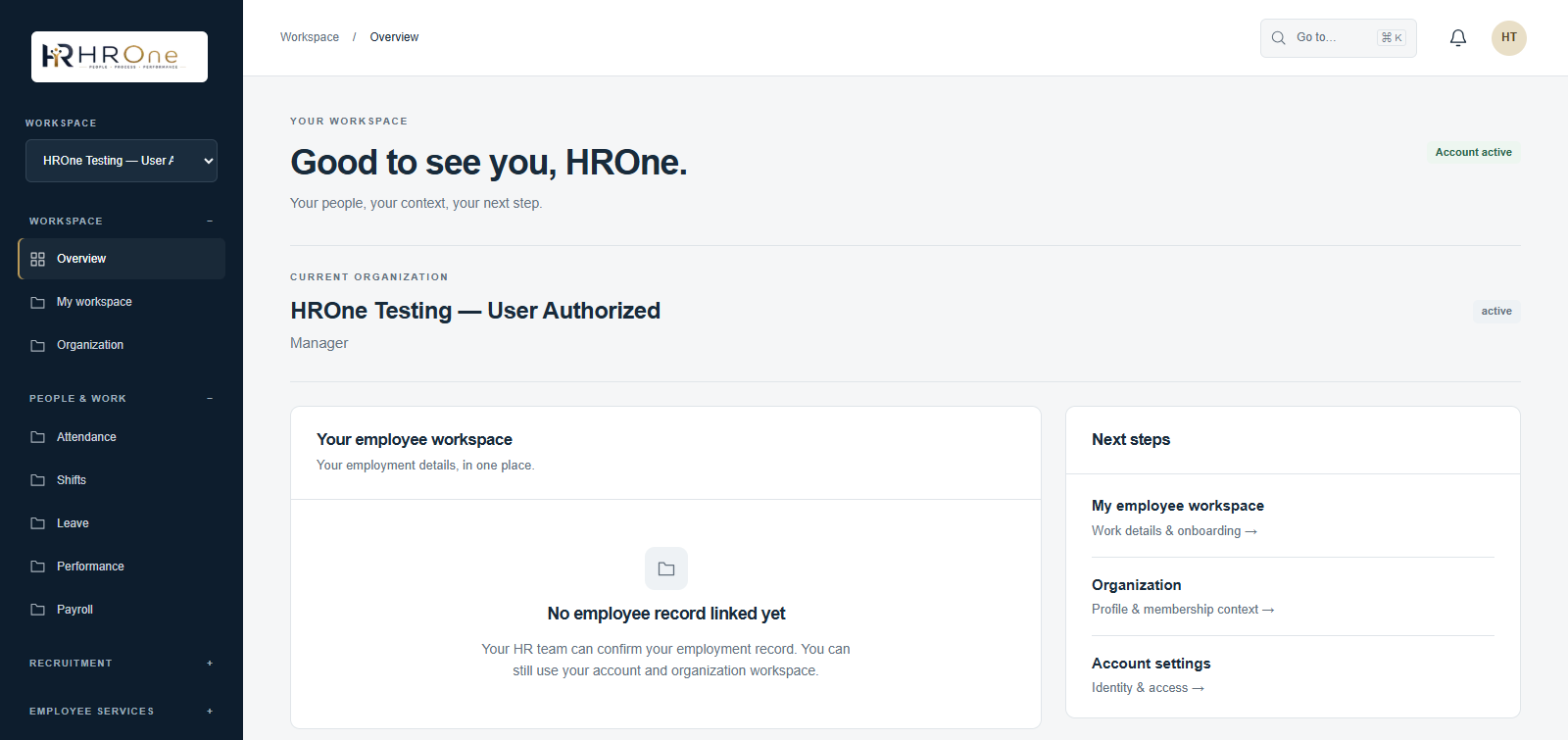
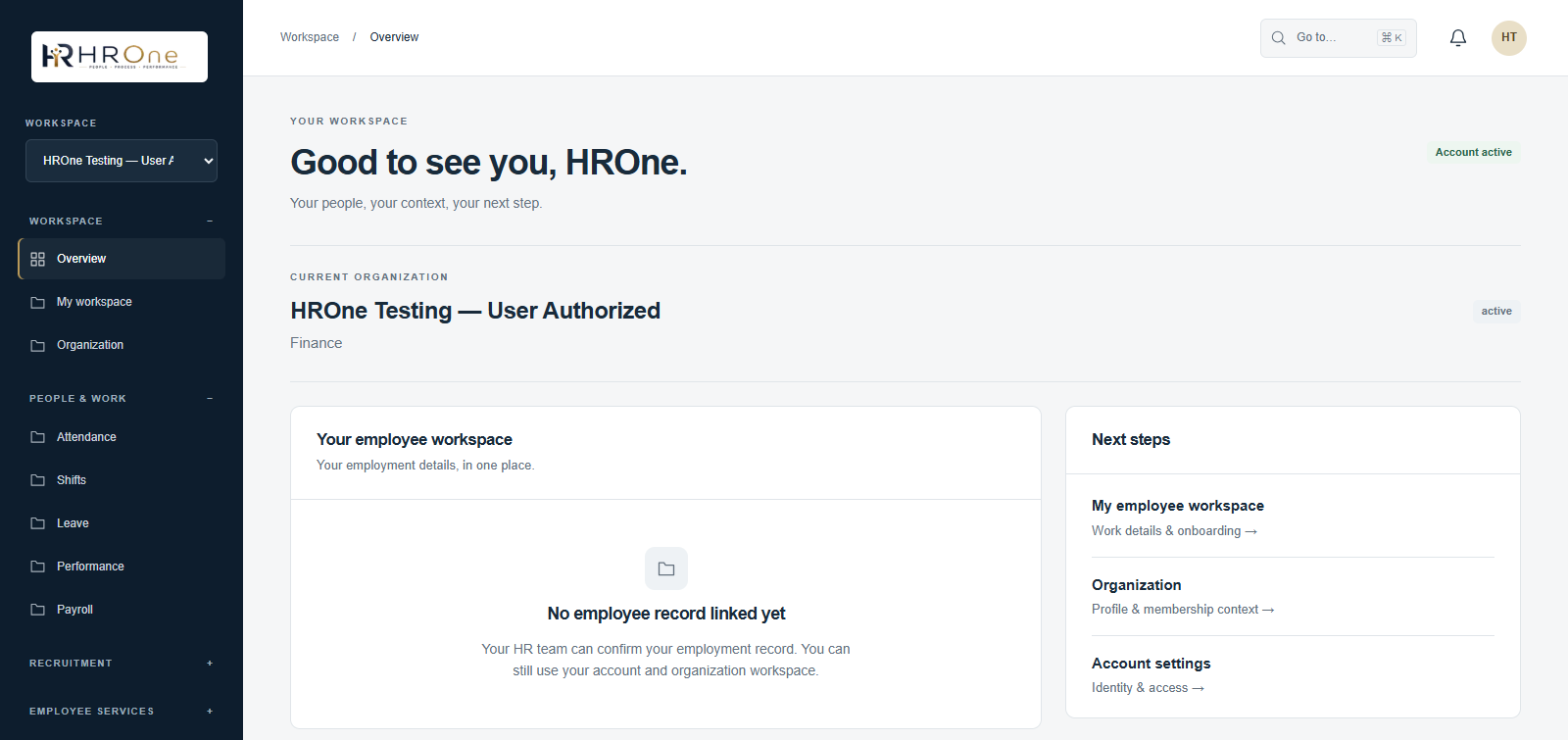
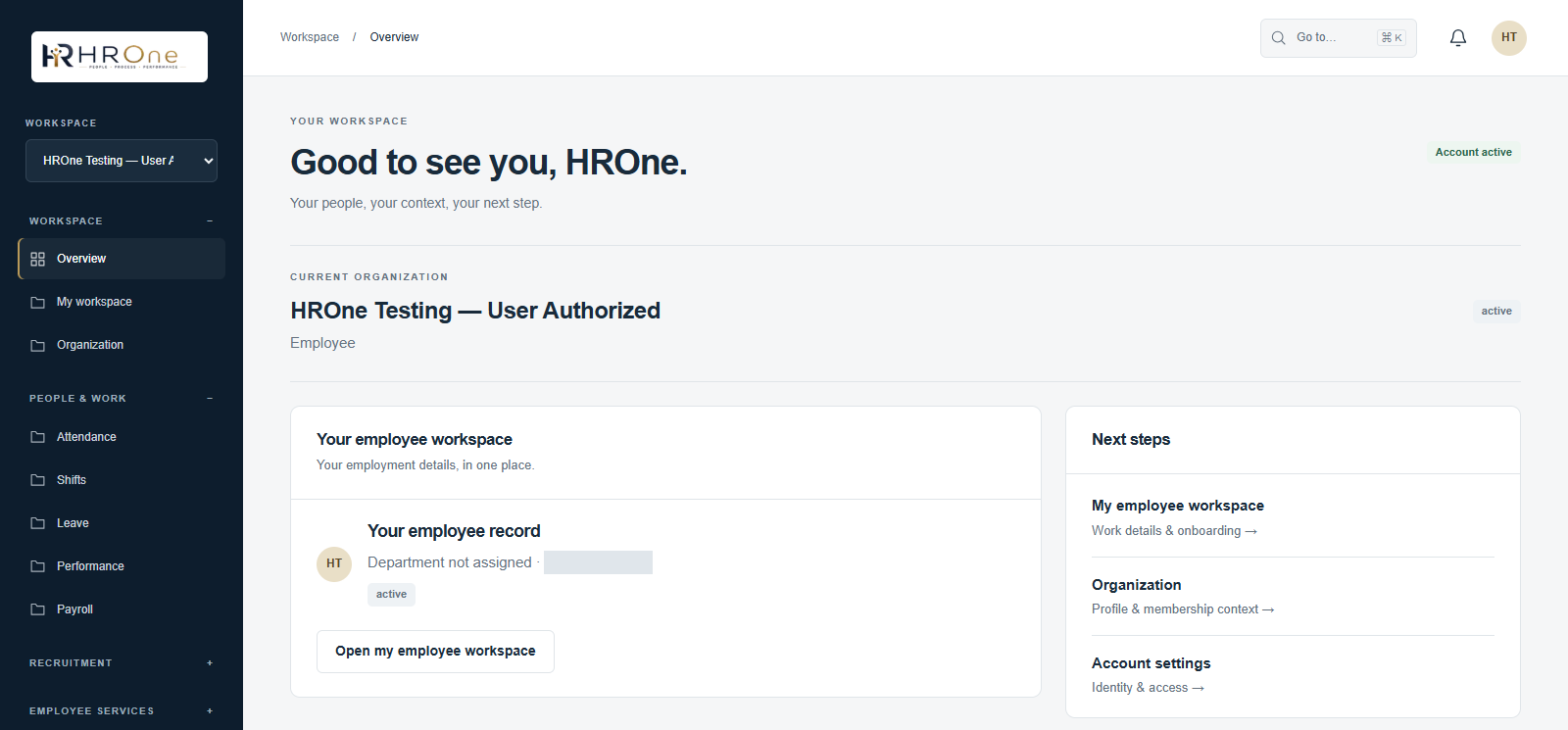
The goal was not to make seven versions of the same dashboard. The goal was to give every role the right workspace, data and actions while keeping the platform connected.
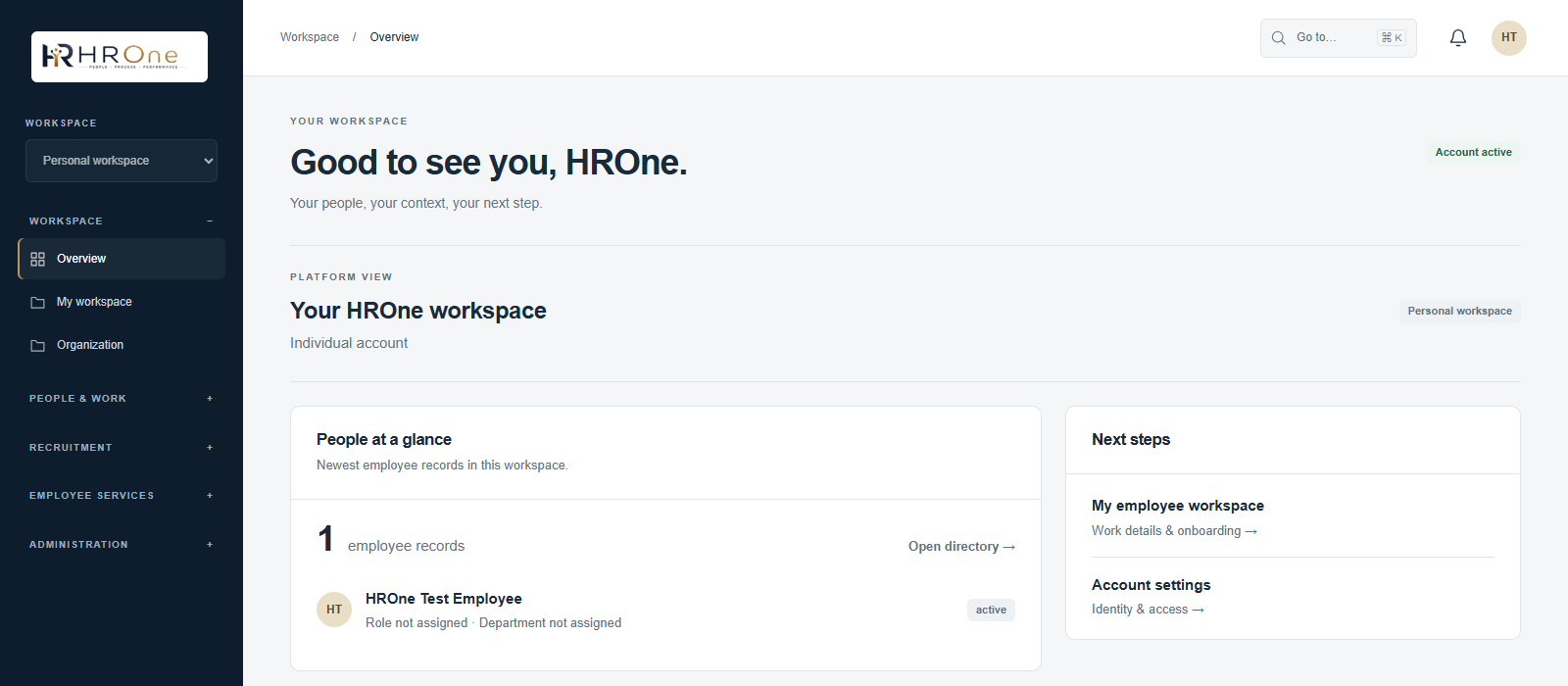
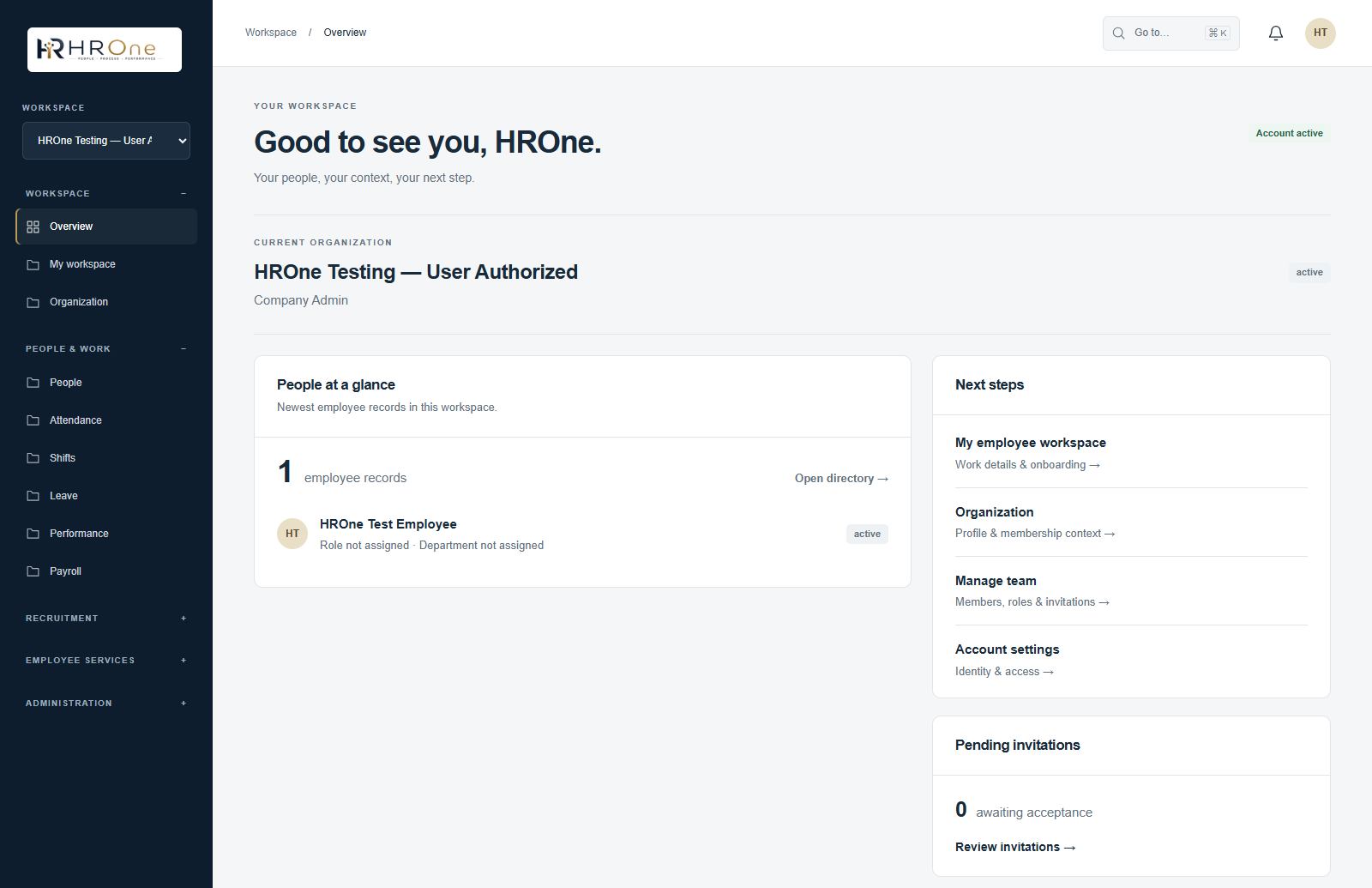
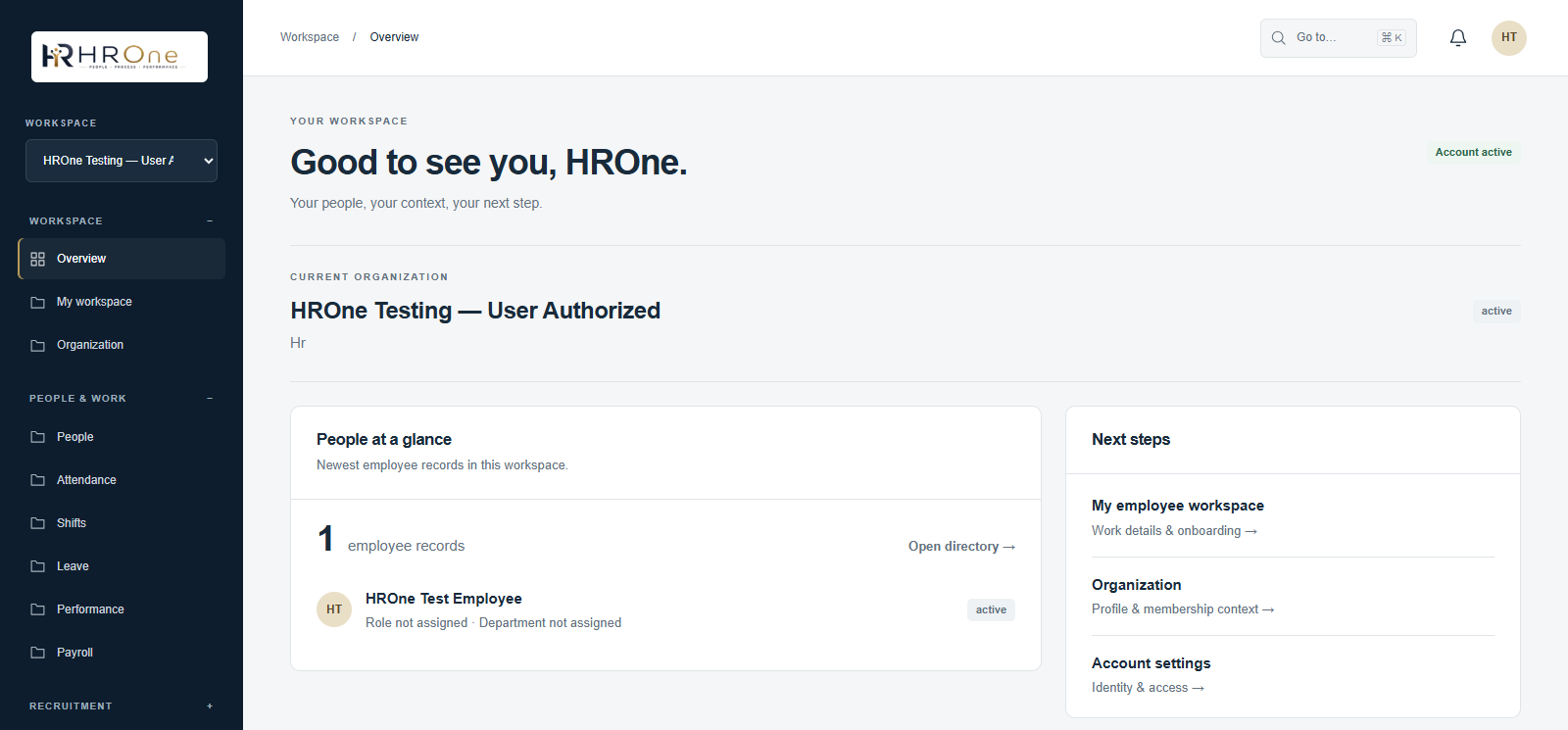
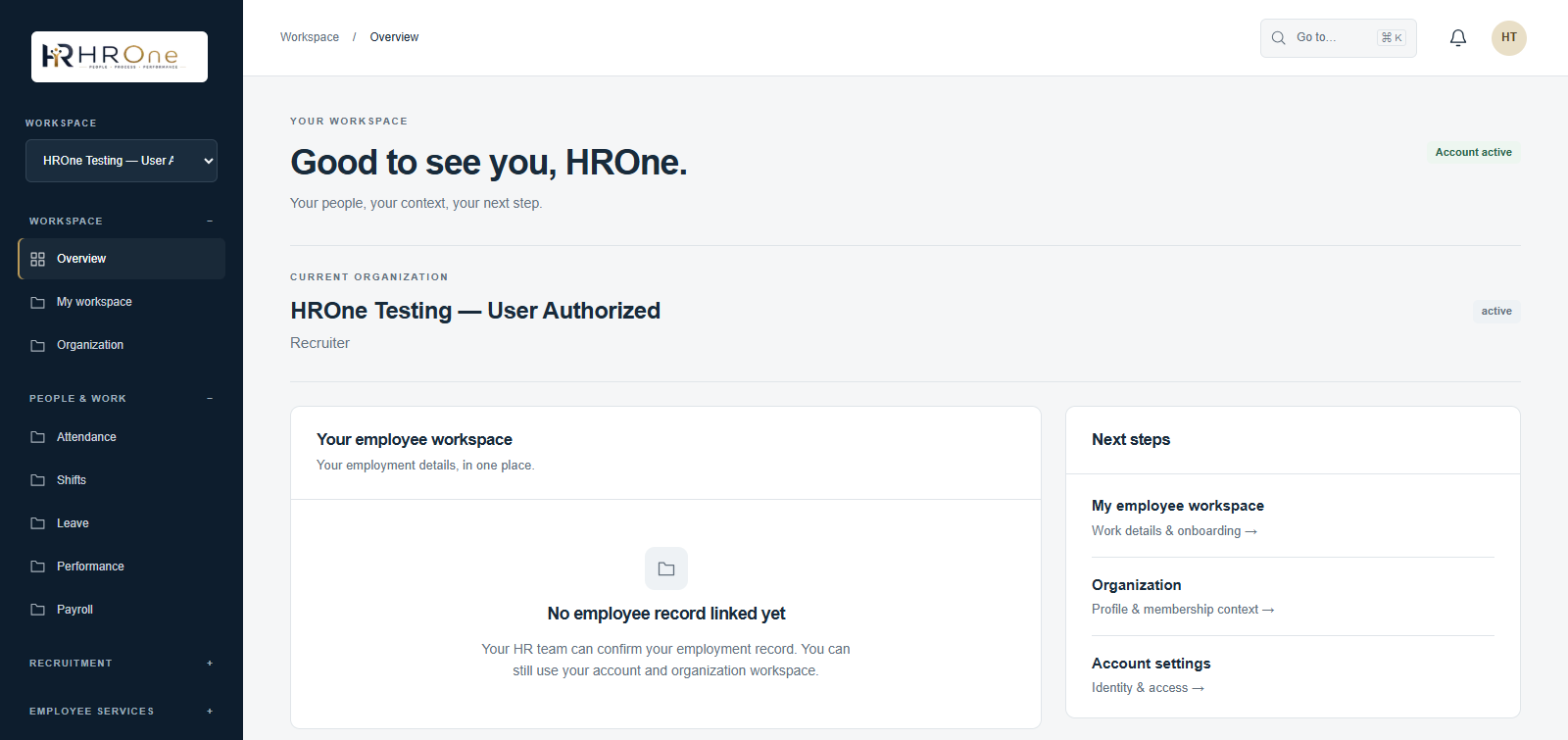
SEVEN ROLE-BASED EXPERIENCES
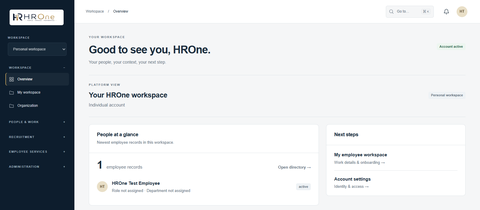
Seven Dashboards.One Connected HR Ecosystem.
HROne's portal is designed around the responsibilities of the person using it.
Super Admin Dashboard
The platform-level control environment.
Designed for high-level administration and oversight across the HROne ecosystem, including organization-level platform management, administrative controls and system-wide visibility appropriate to the Super Admin role.
Organization Admin Dashboard
The organization's administrative workspace.
Provides organization-level control over workforce configuration, teams, users, operational HR areas and the modules made available within that organization's HROne environment.
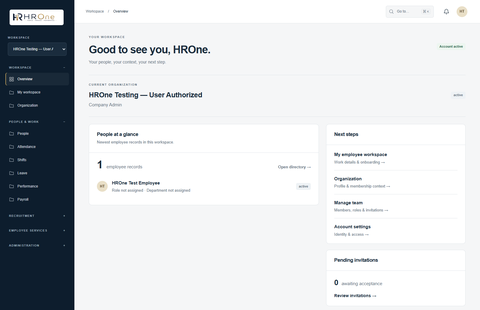
Employee Dashboard
A focused self-service workspace for employees.
Employees interact with their own employment-related information and permitted HR workflows without being exposed to organization-level administration.
Relevant experiences can include personal employment information, attendance, leave, documents, notifications, requests and other employee-facing workflows enabled for their account.
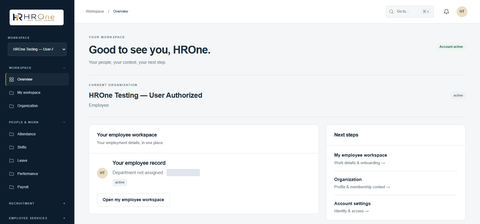
HR Dashboard
The operational HR workspace.
Built around employee administration and HR workflows, bringing relevant workforce operations into a centralized environment.
HR teams can work across the permitted HRMS areas of the platform rather than relying on disconnected tools and spreadsheets.
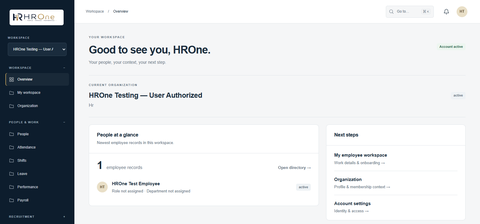
Recruiter Dashboard
The recruitment and talent acquisition workspace.
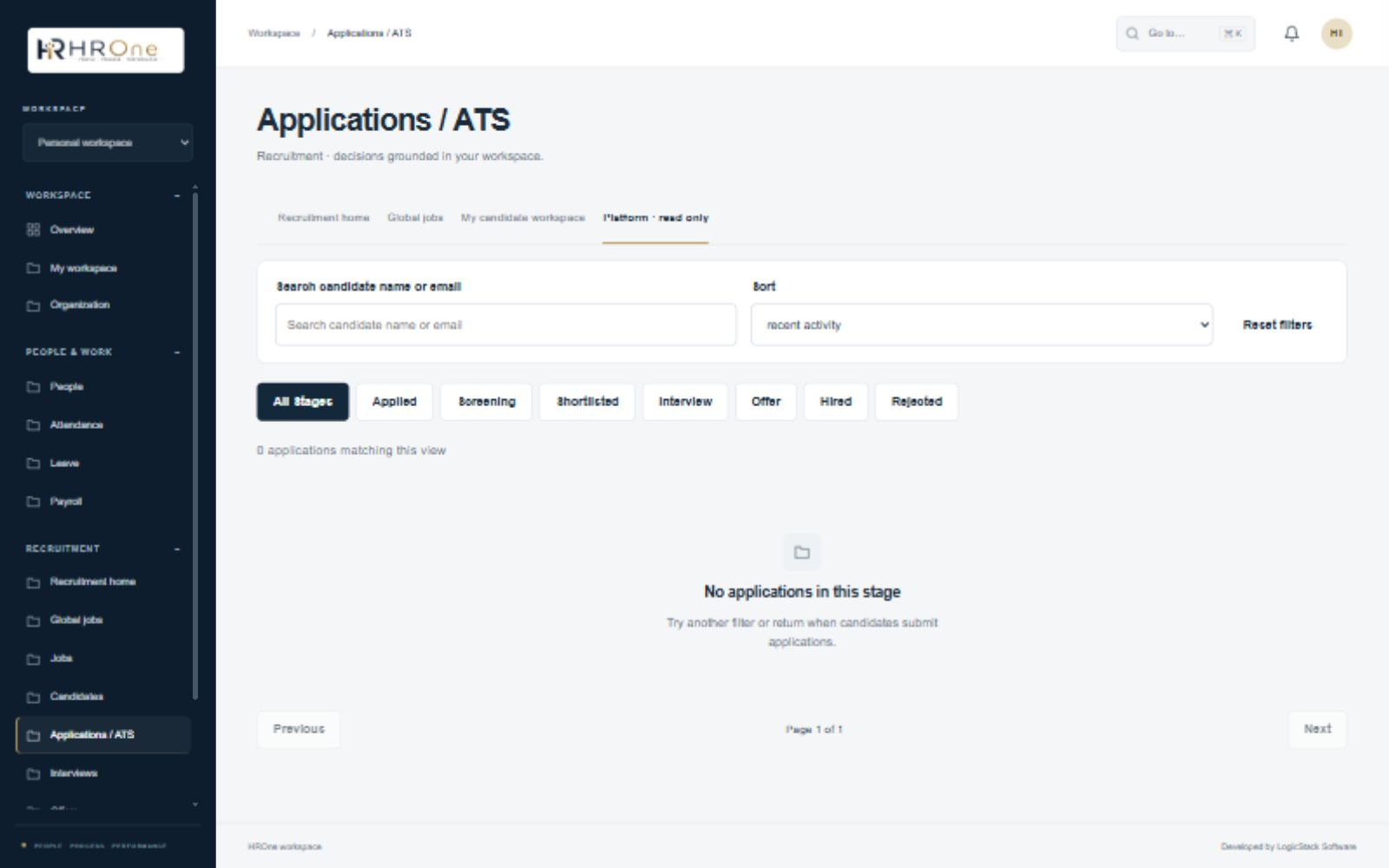
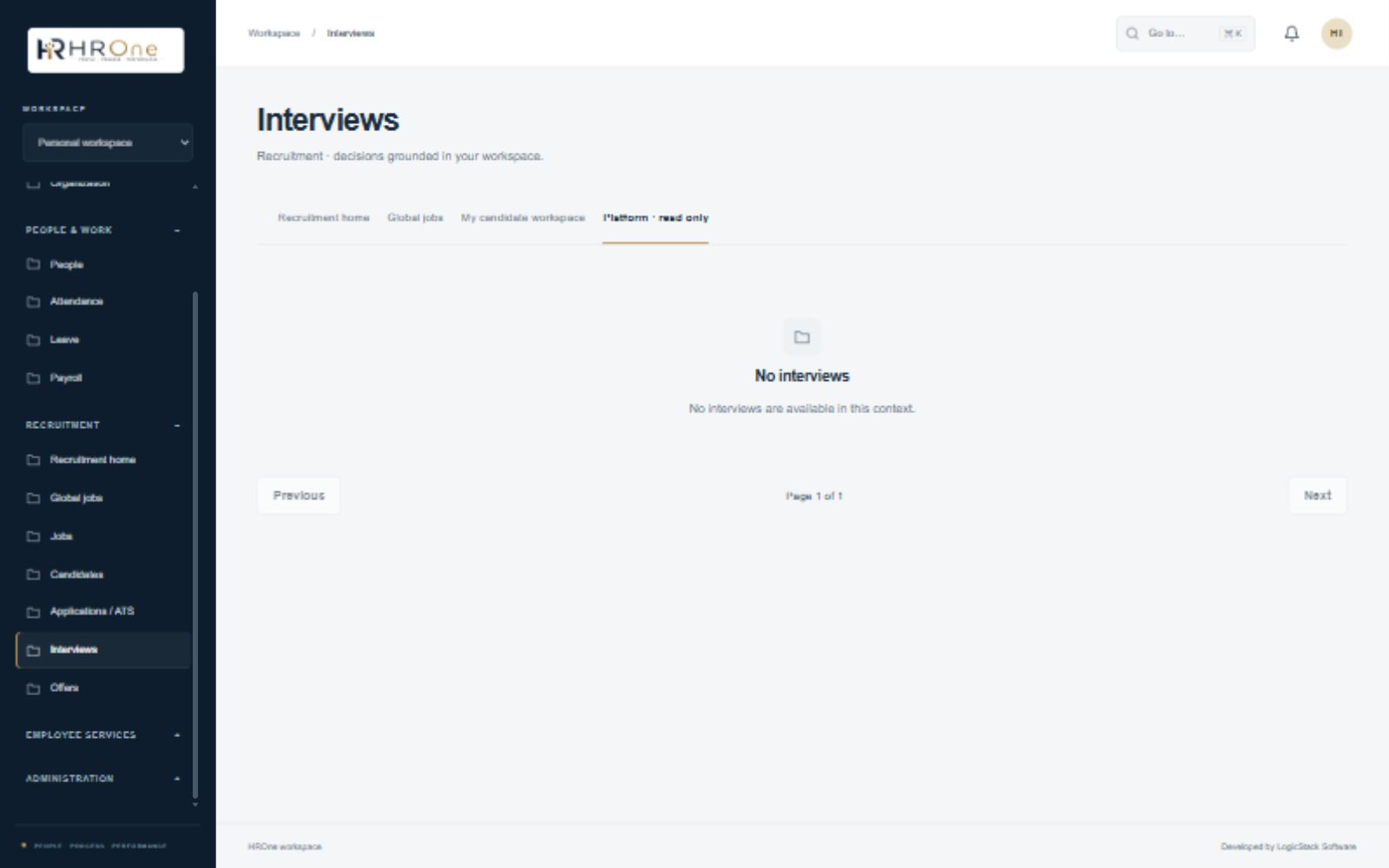
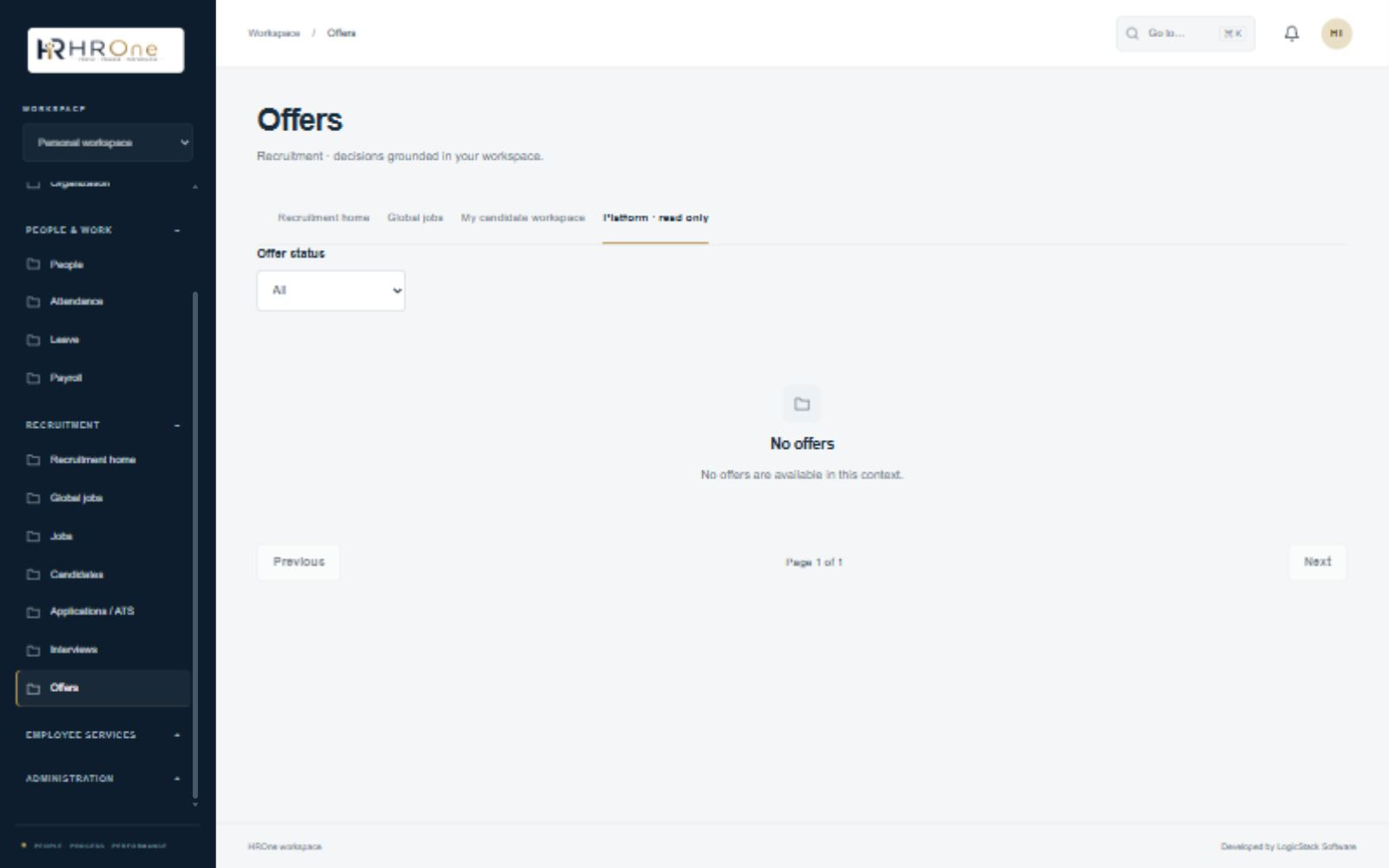
Connects the recruitment lifecycle across jobs, candidates, applications, ATS stages, interviews and offers within the permissions assigned to the recruiter.
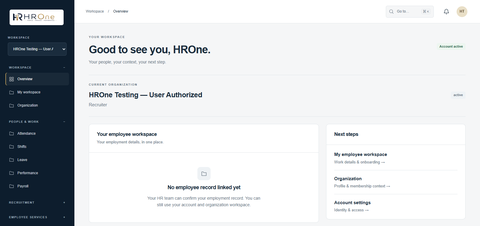
Finance Dashboard
A finance-oriented workspace for permitted workforce financial operations.
Designed so finance users can work with the payroll and commercial areas relevant to their responsibilities without receiving unnecessary HR or platform-administration privileges.
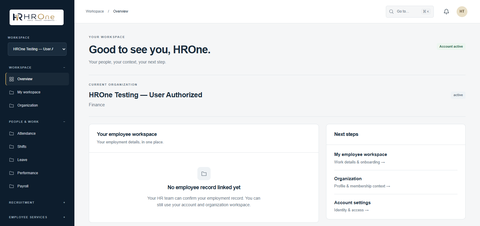
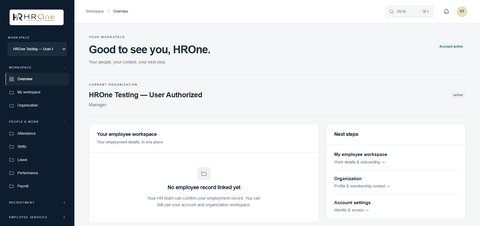
Manager Dashboard
A people-management workspace for managers.
Provides managers with access to the team and workforce workflows relevant to their managerial responsibilities while maintaining organization and permission boundaries.
Need different experiencesfor different users?
We engineer role-based platforms around your actual business operations—not around a pre-built dashboard template.
Recruitment Engineeredas a Workflow, Not a Contact List.
Recruitment is a major part of the HROne architecture.
The system connects the major stages of talent acquisition through structured modules.
Recruitment Foundation
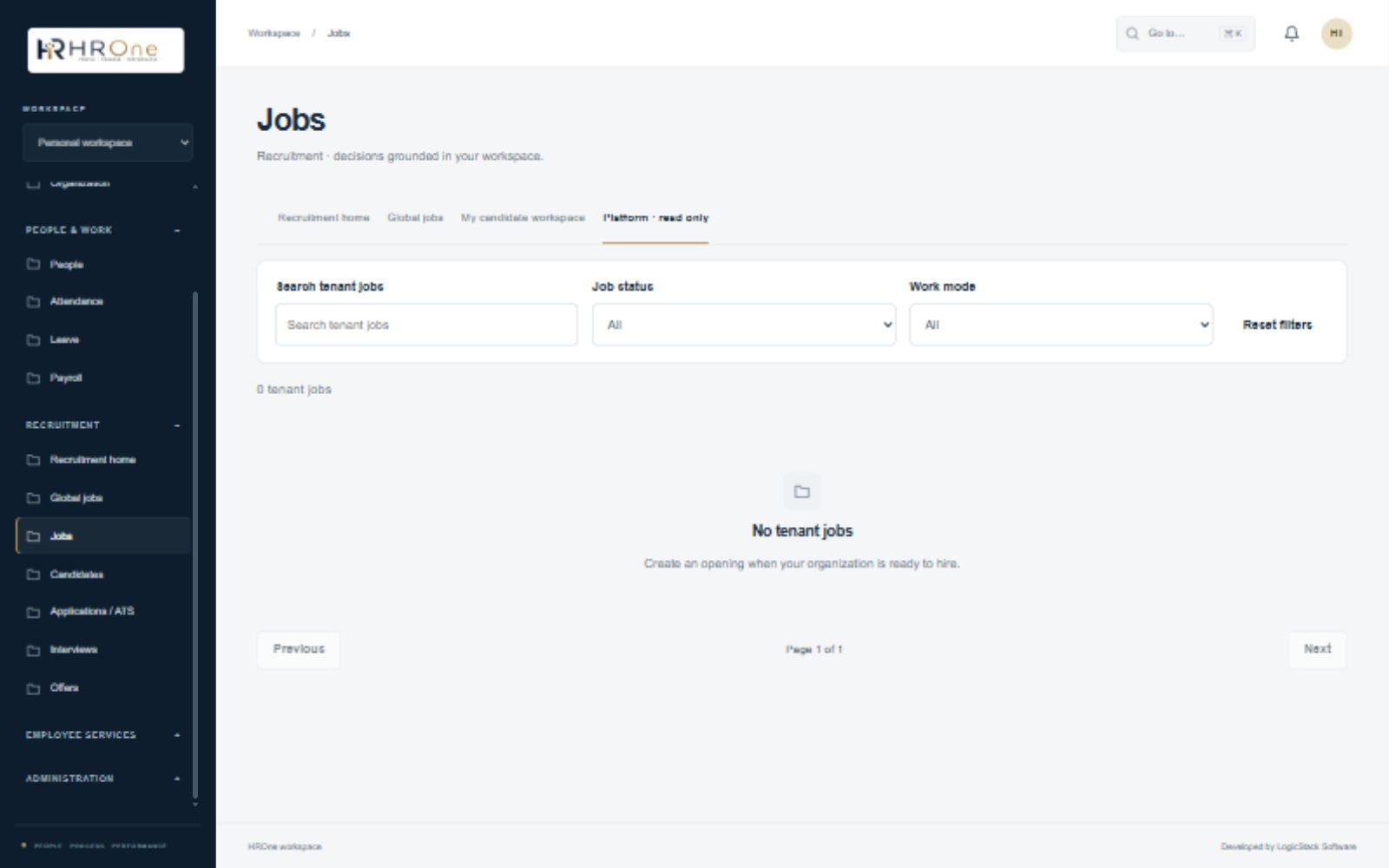
Jobs
Create and manage structured job opportunities.
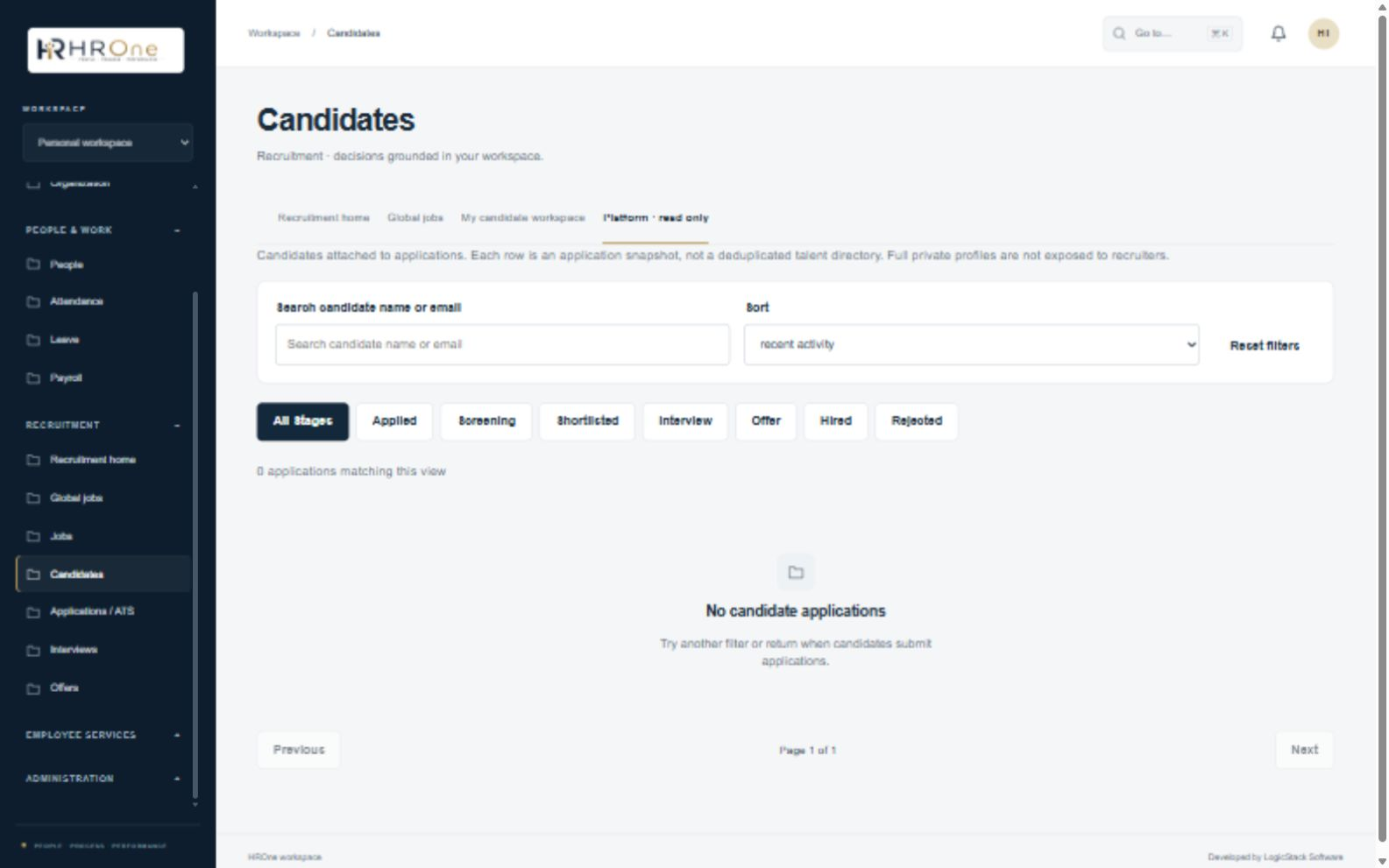
Candidates
Maintain candidate records within the platform.
Applications
Connect candidates with job applications and recruitment workflows.
ATS Pipeline
Move applications through structured recruitment stages.
Interviews
Manage interview-related workflow and records.
Offers
Support the transition from candidate selection toward hiring.
Workflow
Instead of treating these as isolated pages, the architecture connects them as parts of one recruitment lifecycle.
- Job
- Candidate
- Application
- ATS
- Interview
- Offer
From Candidate toWorkforce Operations
HROne extends beyond recruitment into ongoing employee management.
Once talent enters the organization, the HRMS layer provides the foundation for continuing workforce operations.
Core Areas Engineered Include:
- Employee & Organization Management
- Organization Teams
- Attendance
- Leave Management
- Payroll
- Documents
- Performance Management
- HR Requests
- Notifications
This architecture creates continuity between recruitment and employment instead of forcing organizations to move between unrelated systems.
HRMS CORE
- Employee & Organization Management
- Organization Teams
- Attendance
- Leave Management
- Payroll
- Documents
- Performance Management
- HR Requests
- Notifications
ATTENDANCE & LEAVE
Everyday HR OperationsBuilt Into the Platform
Attendance and leave are recurring operational workflows, so they need to be simple for employees while remaining manageable for HR and managers.
HROne's architecture incorporates these capabilities directly into the employee-management ecosystem.
The result is a shared workflow between the employee, relevant manager and HR functions—subject to their assigned permissions.
- Employee
- Manager
- HR
Subject to assigned permissions
CONNECTED
WorkforceOperations
PEOPLE
PROCESS
PERFORMANCE
PAYROLL & FINANCE
Workforce OperationsConnected With Payroll
Payroll cannot be treated as an isolated screen in a serious HR platform.
HROne includes payroll foundations connected to the broader workforce architecture and role-based access model.
Finance-oriented users receive the functionality appropriate to their responsibilities without opening unrelated HR administration privileges.
- Broader Workforce Architecture
- Payroll Foundations
- Finance-Oriented Users
Role-Based Access Model
PERFORMANCE, DOCUMENTS & HR REQUESTS
HR Operations BeyondAttendance and Payroll
A complete workforce platform needs to support the interactions that happen throughout an employee's lifecycle.
HROne therefore includes dedicated foundations for:
Performance
Structured performance-management workflows for permitted users.
Documents
Centralized employee/workforce document capabilities with appropriate access boundaries.
HR Requests
A structured way to handle employee-to-HR operational requests inside the platform.
Notifications
A notification foundation that connects users with relevant platform activity.
THROUGHOUT THE EMPLOYEE LIFECYCLE
WORKFORCE INTELLIGENCE FOUNDATION
Structured WorkforceData at Scale
HROne's engineering extends beyond conventional CRUD-style HR software.
The platform includes a structured workforce intelligence dataset based on ESCO-oriented occupation and skills data.
- Occupations
- 3,039
- Skills
- 13,939
- Occupation–Skill Relationships
- 126,051
This creates a foundation for richer job, skill and workforce intelligence capabilities as the product evolves.
Workforce Intelligence Foundation
API-FIRST ARCHITECTURE
One Backend.Multiple Digital Products.
One of the most important architectural decisions in HROne was to avoid building the web application as a closed system.
The business backend was designed API-first.
- Public Website / Web Experience
- Next.js Application Layer
- Laravel API
- Authentication + Permissions + Business Services
- PostgreSQL + Redis
SHARED API FOUNDATION
This reduces duplicated business logic and provides a cleaner foundation for long-term product development.
TECHNOLOGY STACK
Frontend
- Next.js 16.3.6
- TypeScript
Backend
- Laravel 13.33.0
- PHP
Database
- PostgreSQL 16.15
Caching / Supporting Infrastructure
- Redis
Runtime / Tooling
- Node.js 24.17.0
- npm 11.13.0
- pnpm 11.8.0
- Composer 2.10.0
- Git 2.52.0
Production Infrastructure
- AlmaLinux 9.8
- OpenLiteSpeed 1.8.4
- PHP Runtime 8.5.6
MULTI-TENANCY & SECURITY
Enterprise Architecture RequiresData Boundaries
HROne was engineered as a multi-tenant platform.
Different organizations can operate within the product while application logic maintains organization boundaries and permission controls.
Engineering considerations include:
- Tenant-aware application architecture
- Organization isolation
- Authentication controls
- Role-based authorization
- Permission-driven operations
- Ownership authorization
- Protected routes
- API validation
- Security-oriented test coverage
- Database access restricted at infrastructure level
- Organization A
- Authorized Users
- Permitted Data
- Organization B
- Authorized Users
- Permitted Data
The PostgreSQL database is configured for local application access rather than unnecessary public database exposure.
TESTING AS PART OF DEVELOPMENT
We Didn't Treat Testingas a Final Checklist
HROne was developed incrementally with automated verification expanding alongside the product.
Backend development progressed through increasingly comprehensive test milestones as modules were introduced.
Verified Engineering Proof
- 855Backend Verification Cases
- 266/266Portal Regression Tests
- 13/13Website Test Suite
- Tenant IsolationVerified
- Protected WorkflowsTested
The purpose was not simply to achieve a large test count.
The testing strategy helped validate authentication, permissions, organization boundaries, business workflows and regressions as the platform expanded.
Development progression
- Identity→
- Authentication→
- Organization→
- Candidates→
- Team→
- Jobs→
- Applications→
- ATS→
- Interviews→
- Offers→
- HRMS→
- Attendance→
- Leave→
- Payroll→
- Commercial→
- Notifications→
- Documents→
- Performance→
- HR Requests→
- Expanded Platform Verification
PERFORMANCE ENGINEERING
Enterprise FunctionalityWithout Sacrificing Speed
Complex applications often become slow as features accumulate.
Performance was therefore treated as an engineering requirement rather than a post-launch optimization task.
Verified Lighthouse Results
Desktop
- Performance
- 100
- Accessibility
- 100
- Best Practices
- 100
- SEO
- 100
Mobile
- Performance
- 92
- Accessibility
- 100
- Best Practices
- 100
- SEO
- 100
Performance testing was conducted alongside functional and navigation verification to ensure that product growth did not automatically mean poor user experience.
PUBLIC PRODUCT WEBSITE
The Product Needed aHigh-Performance Acquisition Layer Too
Building the application was only one part of HROne.
The product also required a professional public-facing website capable of explaining the platform, supporting product discovery and converting interested organizations.
The public website was developed with:
- Product-focused information architecture
- Responsive design
- High-performance delivery
- Conversion-oriented CTAs
- Contact/lead journeys
- Demo-oriented journeys
- Search-engine foundations
- Structured metadata
- Consistent HROne branding
- Application/login connection
- Mobile responsiveness
23-Page Product Website
The public experience was expanded into a substantial product website rather than a single marketing page.
BRAND CONSISTENCY
One Product IdentityAcross Every Surface
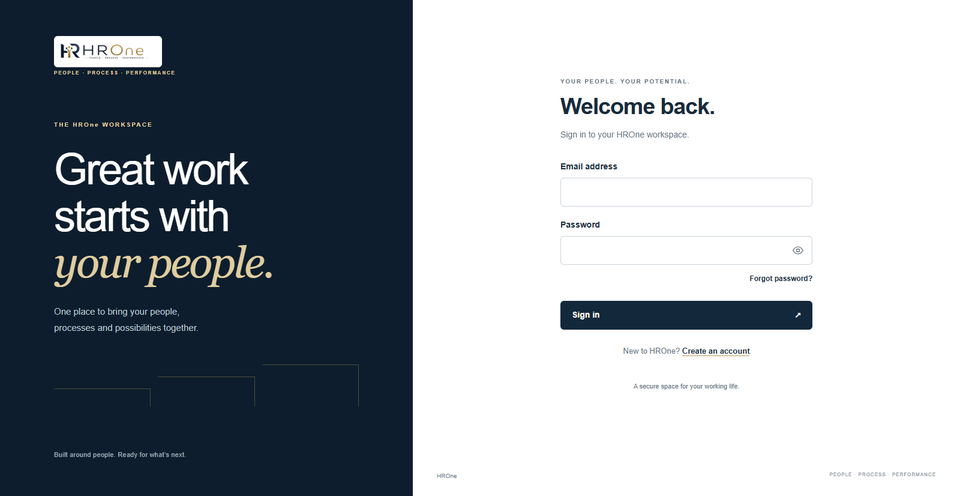
HROne's approved identity was carried across the product ecosystem.
- Public website
- Authentication screens
- Portal
- Browser favicon
- Metadata icons
- PWA / Web application surfaces
- Bookmarks / Home-screen use
- Mobile application identity
- Public website
- Authentication screens
- Portal
- Browser favicon
- Metadata icons
- PWA / Web application surfaces
- Bookmarks / Home-screen use
- Mobile application identity
No framework-default branding or unrelated placeholder marks should remain in production product surfaces.
WEB + MOBILE ECOSYSTEM
The Web Platform Was Built With Mobile Expansion in Mind
HROne was not architected as a web-only dead end.
Its API-first foundation allows the business logic and data layer to support dedicated Flutter applications for Android and iOS.
Ecosystem
- HROne Public Website
- HROne Web Portal
- Shared Laravel API
- Flutter Android App
- Flutter iOS App
This approach helps maintain consistency across platforms while avoiding unnecessary duplication of core backend business logic.
DEVELOPMENT APPROACH
How LogicStack Approacheda Platform of This Scale
Architecture First
Establish the backend, data and organization foundations before building isolated visual screens.
Modular Development
Develop major business domains incrementally rather than creating one tightly coupled codebase.
PROJECT SNAPSHOT
Enterprise Productat a Glance
- Industry
- HRTech / Enterprise SaaS
- Product
- Recruitment + HRMS + Workforce Operations Platform
- Architecture
- Multi-tenant, API-first
- Portal
- 7 role-based dashboards
- Frontend
- Next.js 16.3.6 + TypeScript
- Backend
- Laravel 13.33.0 API
- Data Layer
- PostgreSQL 16.15 + Redis
- Infrastructure
- AlmaLinux 9.8 + OpenLiteSpeed 1.8.4
- Public Experience
- 23-page product website
- Mobile Ecosystem
- Shared API foundation for Flutter Android and iOS applications
PROBLEM → SOLUTION → RESULT
Turning Fragmented HR Operations
Into One Connected Product
The Problem
Recruitment, employee administration, attendance, leave, payroll and workforce operations can easily become fragmented across different tools. At enterprise level, the challenge becomes harder because different organizations and different user roles must not receive the same access.
The Engineering Solution
LogicStack engineered HROne around a shared API foundation, tenant-aware organization boundaries, role-based authorization, permission-driven actions and modular business domains.
The Result
A connected product foundation that can support recruitment and ongoing workforce operations while presenting different experiences to Super Admins, Organization Admins, Employees, HR teams, Recruiters, Finance teams and Managers.
COMPLETE WORKFORCE LIFECYCLE
From Hiring Need to Ongoing Workforce Operations
HROne connects major recruitment and HR domains rather than treating them as unrelated screens.
- Job
- Candidate
- Application
- ATS
- Interview
- Offer
- Employee
- Attendance / Leave
- Payroll
- Performance / Documents / HR Requests
This continuity is one of the platform’s core architectural strengths: recruitment can transition into workforce operations on a shared product foundation.
WHY THIS PROJECT MATTERS
What HROne DemonstratesAbout LogicStack Software
HROne is a practical demonstration of our ability to engineer more than brochure websites.
The project demonstrates experience across:
- Enterprise SaaS architecture
- Multi-tenant systems
- Complex role-based access control
- API-first backend engineering
- Recruitment and ATS workflows
- HRMS and workforce operations
- Attendance and leave workflows
- Payroll-oriented foundations
- Performance, documents and HR requests
- Data-intensive occupation and skills foundations
- High-performance Next.js experiences
- Laravel API development
- PostgreSQL and Redis
- Automated verification and regression testing
- Production infrastructure
- SEO, AEO and GEO foundations
- Responsive web engineering
- Shared backend architecture for Flutter mobile applications
REAL ENGINEERING.
CONNECTED PRODUCT THINKING.
A Platform ThatBrings It All Together
- PEOPLE
- PROCESS
- PERFORMANCE
HROne is a practical demonstration of our ability to engineer more than brochure websites.
FLUTTER MOBILE APP CROSS-LINK
HROne Extends Beyondthe Web Platform
The HROne web platform and its API-first backend form the foundation for a dedicated Flutter mobile application ecosystem.
This web-platform case study should show only a concise mobile teaser. The complete Flutter application—including its real screens, mobile-specific UX, role experiences, API integration, Android/iOS engineering, testing and performance—should be presented in a separate dedicated case study.
Shared Backend
API-first foundation shared across web and mobile.
Connected Product Ecosystem
A common business and data foundation across digital products.
Flutter Android & iOS
Dedicated mobile applications designed around the shared API foundation.
Mobile-Ready Architecture
The web platform was engineered with mobile expansion in mind.
HROne
Mobile EcosystemFlutter Mobile Application
Shared API Foundation
Android + iOS- Flutter Android App
- Flutter iOS App
EXPLORE THE FULL MOBILE EXPERIENCE
View the HROne Flutter Mobile App Case Study
- WEB PLATFORM
- SHARED API FOUNDATION
- FLUTTER MOBILE ECOSYSTEM
FAQ
Common Questions About HROne
Clear answers about what we build, how we work and what HROne demonstrates.
Yes. Our work can cover architecture, backend APIs, databases, role-based portals, business workflows, public product websites, testing, performance engineering, deployment and mobile-ready foundations according to project requirements.
Yes. HROne demonstrates a role-based approach where different user types operate through different responsibilities and permission boundaries.
Yes. HROne was engineered around tenant-aware organization boundaries and permission controls.
Yes. HROne includes jobs, candidates, applications, ATS stages, interviews and offers as connected recruitment domains.
Yes. HROne includes HRMS foundations covering employee and organization operations, attendance, leave, payroll, documents, performance, HR requests and notifications.
Yes. An API-first architecture can allow web and mobile clients to share core backend business logic. HROne’s architecture was designed around this principle.
Yes. HROne includes automated backend verification, portal regression testing, website testing, navigation QA and Lighthouse performance verification.
Project feasibility depends on the existing architecture and code quality. We can review an existing system first and define whether extension, refactoring or a staged rebuild is the appropriate engineering approach.
HAVE A SPECIFIC REQUIREMENT?
Let’s Discuss Your Project
Share your goals and we’ll help define the right approach.
- ENGINEERING DISCUSSION
- SOLUTION PLANNING
- NEXT STEPS
FINAL CONVERSION CTA
Building SomethingThis Complex?
Whether you are planning an HR platform, ATS, CRM, ERP, marketplace, operations portal or another custom SaaS product, LogicStack Software can help turn the requirement into a scalable product architecture and production-ready implementation.
Tell us what your product needs to do, who needs to use it and what systems it needs to connect with. We will help translate the business requirement into a practical technical roadmap.
Understand Your Goals
Deep discovery of your business requirements
Plan the Right Solution
A clear and practical technical roadmap
Build and Deploy
Scalable, secure and high-performance implementation
Long-Term Partnership
Ongoing support for your product’s growth
FROM IDEA TO IMPACT