CASE STUDY · E-COMMERCE · FRANCE
DENVA FOREST
We Built a Complete French E-Commerce Experience — From Product Discovery to Order Confirmation
DENVA FOREST is a French heating-products e-commerce experience designed and developed by LogicStack Software, bringing firewood, wood pellets, charcoal & briquettes, stoves and accessories into one structured online storefront.
From product discovery and catalogue navigation to detailed product pages, cart, checkout and bank-transfer order confirmation, the experience was built around clarity, trust and a friction-free purchasing journey.
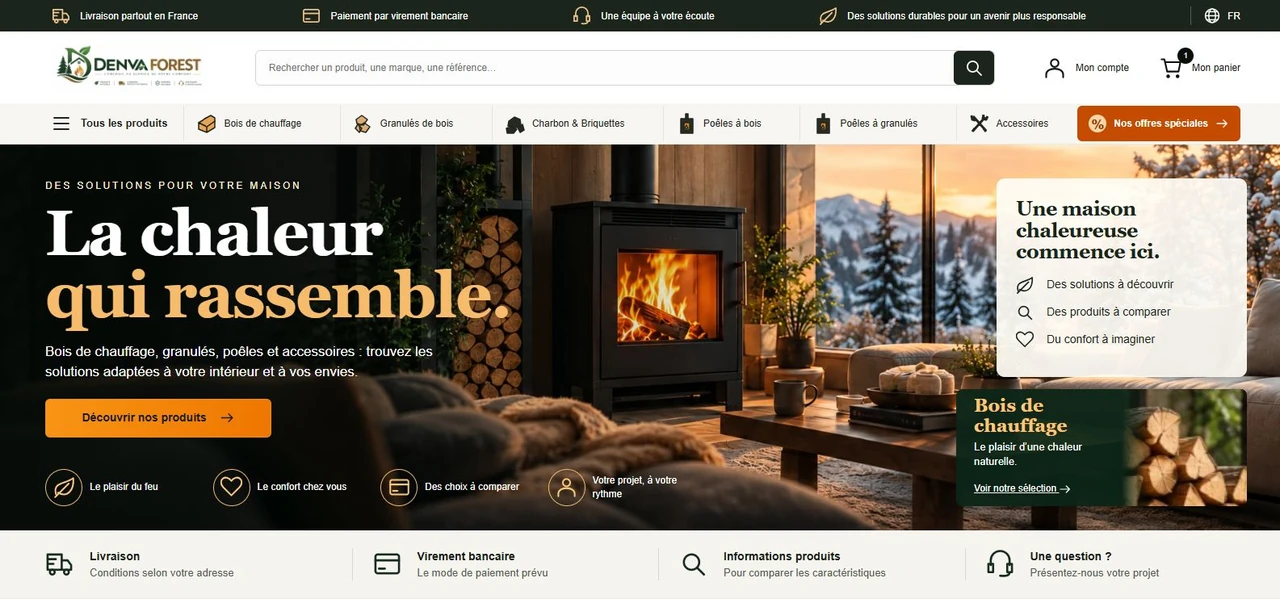
Real production interfaces. Designed & developed by LogicStack Software.
- 68Products
- 6Core Product Categories
- CustomWooCommerce
- End-to-EndCommerce Flow
PROJECT OVERVIEW
A Complete Commerce Platform Built for the French Heating Market
DENVA FOREST needed more than a conventional online store. The platform had to organise a diverse heating-product catalogue, communicate product information clearly and guide customers through a complete purchasing journey with confidence.
LogicStack Software delivered a custom WordPress and WooCommerce experience covering product discovery, category navigation, detailed product presentation, cart, checkout and bank-transfer order confirmation — all within a cohesive responsive storefront.
One connected storefront — designed to take customers from discovery to confirmed order.
At a glance
- Client
- DENVA FOREST
- Market
- France
- Industry
- Heating & Home Energy
- Platform
- WordPress + WooCommerce
- Catalogue
- 68 Products
- Product structure
- 6 Core Categories
- Development
- Custom WordPress Theme
- Commerce journey
- Discovery → Product → Cart → Checkout → Confirmation
LogicStack’s role
- Strategy
- UI/UX Design
- Custom WordPress Development
- WooCommerce Development
- Catalogue Implementation
- Responsive Development
- Technical SEO Foundation
- Analytics & Google Ecosystem Setup
THE BUSINESS
One Storefront.
Multiple Ways to Heat a Home.
DENVA FOREST operates in a product space where customers need to compare different heating solutions, formats and product types before making a purchase.
The digital experience therefore needed to bring a broad catalogue into one clear commercial structure — helping customers move from understanding what is available to identifying the product that fits their needs.
The catalogue brings together traditional heating fuels, modern pellet solutions, stoves and supporting products within a single e-commerce journey.
Each category carries a different buying context. A customer shopping for firewood does not evaluate a product in the same way as someone comparing a stove or choosing an accessory.
The platform therefore needed enough structure to support these different journeys while still feeling like one coherent brand and one connected store.
-
Firewood
Natural solid-fuel products

-
Wood Pellets
Pellet-based heating products

-
Charcoal & Briquettes
Alternative solid-fuel products

-
Wood-Burning Stoves
Heating equipment

-
Pellet Stoves
Pellet-based heating equipment

-
Accessories
Supporting products







The business challenge was not simply putting products online.
It was turning a diverse heating catalogue into a storefront customers could understand, explore and buy from with confidence.
THE CHALLENGE
Turning Product Complexity Into a Simple Buying Experience
The challenge was not simply to place 68 products online.
DENVA FOREST brings together different product families, buying contexts and information requirements. The experience had to make that complexity feel simple — while maintaining a consistent journey from the first product discovery through to order confirmation.
One connectedbuying journey.
Clear Product Discovery
Customers needed to move through a broad catalogue without feeling overwhelmed. Categories, navigation and product presentation had to make different heating solutions easy to discover and understand.
Product Information That Supports Decisions
Heating products are not impulse purchases. Product pages needed enough structure to communicate important information clearly while keeping the buying experience focused and approachable.
Consistency Across Different Product Families
Firewood, pellets, charcoal, stoves and accessories represent different buying contexts. The platform needed to support those differences without fragmenting the overall brand experience.
A Friction-Free Commerce Flow
The experience needed to remain coherent across:
Discovery → Product → Cart → Checkout → Confirmation
Every stage had to feel like part of the same storefront.
Trust at the Point of Purchase
Pricing, product details, cart information, checkout steps and bank-transfer instructions needed to be presented clearly so the customer always understood what happens next.
Responsive Without Compromise
The same catalogue and commerce journey had to remain clear and usable across desktop, tablet and mobile — without reducing the mobile experience to a compressed version of desktop.
The real challenge was balancing catalogue depth with simplicity: giving customers enough information to make a decision without making the store feel complicated.
OUR STRATEGY
Structure the Complexity. Connect the Journey. Keep Buying Simple.
Our approach was to treat the storefront as one connected commerce system rather than a collection of individual product pages.
We created a clear hierarchy around product discovery, evaluation and purchase — giving each product family enough flexibility for its own buying context while maintaining one consistent DENVA FOREST experience.
Complex Catalogue
68 Products / 6 Categories
Clear Structure
Navigation / Hierarchy / Product Discovery
Connected Journey
Discover → Evaluate → Cart → Checkout
Confident Purchase
Clear Confirmation / Next Step
Organise the Catalogue
Create a clear product architecture around six core categories so customers can understand the range and move quickly toward relevant products.
6 Core Categories → Clear Navigation → Relevant Products
Design for Product Decisions
Build product presentation around the information customers need when evaluating heating products — combining clear hierarchy, product details, pricing and purchasing actions without unnecessary visual friction.
Product Information → Evaluation → Purchase Decision
Connect the Commerce Journey
Treat discovery, product pages, cart, checkout and confirmation as one continuous experience rather than disconnected templates.
Discover → Evaluate → Cart → Checkout → Confirm
Build One Consistent System
Use a custom WordPress and WooCommerce implementation to keep the visual language, interactions and commerce experience consistent across different product families and screen sizes.
Custom Theme + WooCommerce → Unified Storefront
Design Responsively From the System Up
The mobile experience was treated as part of the commerce system, not as a reduced desktop layout.
Navigation, product discovery, product information and purchasing actions were structured to remain clear across screen sizes.
Desktop + Tablet + Mobile → One Experience
Build the Foundation for Discoverability
The implementation also established the technical foundation needed for search visibility, product discoverability, analytics and the wider Google ecosystem.
Technical SEO + Analytics + Google Ecosystem → Discoverability Foundation
The solution was not to remove the complexity of the catalogue.
It was to organise that complexity so customers never had to feel it.
VISUAL IDENTITY & UI/UX
A Visual System Built Around Warmth, Trust and Product Clarity
The DENVA FOREST interface needed to feel connected to the warmth and natural character of its product range while remaining clear, structured and commercially focused.
We built the visual direction around a restrained palette, strong content hierarchy and product-led imagery — allowing the catalogue to remain the focus while giving the storefront a distinctive, consistent identity.

02 / Production palette
- Forest
- #112D20
- Warm accent
- #C54B00
- Cream
- #FAF9F5
- Ink
- #20241F
03 / Type & hierarchy
La chaleur
qui rassemble.
Display / Georgia · Bold 700
Des produits sélectionnés pour un hiver serein.
Body & commerce / Arial, Helvetica, sans-serif
Production button treatment · 6px radius
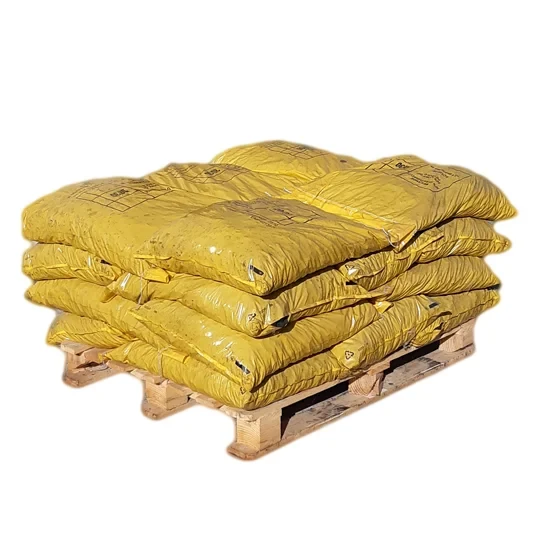 En stock
1/2 palette 500 kg – Charbon 20/30 Anthracite supérieur
Charbon & Briquettes
320,00 €Ajouter au panierNatural Brand Character
Deep forest tones establish a strong connection with the DENVA FOREST identity, while warm accents introduce energy around important commercial actions.
Products Take Priority
Real product imagery remains central to the interface. Supporting UI elements are intentionally controlled so products, prices and purchasing information remain easy to identify.
Clear Visual Hierarchy
Headings, supporting information, pricing and calls to action use a consistent hierarchy to help customers scan pages quickly and understand what matters next.
Consistent Interaction Language
Buttons, product cards, navigation elements and commerce actions follow one visual language across the storefront, helping different product categories feel part of the same experience.
The visual system was designed to support the shopping experience — not compete with it.
HOMEPAGE EXPERIENCE
From First Impression to Product Discovery
The homepage was designed as the starting point of the DENVA FOREST commerce journey — balancing brand presentation with direct access to the product catalogue.
Rather than treating the homepage as a promotional landing page alone, the experience creates clear routes into the store while introducing the range, commercial information and product context customers need to begin exploring.

A Clear Entry Point
The opening experience establishes the DENVA FOREST brand while giving customers an immediate route toward the product catalogue and key shopping actions.
Category-Led Discovery
The homepage introduces the breadth of the catalogue through clear product and category pathways, helping customers move from a broad need toward a relevant product family.
Product-Led Merchandising
Real products and commercial information are integrated into the homepage so the experience moves naturally from brand discovery toward shopping.
Trust Through Information
Supporting content, service information and commercial reassurance help customers understand the buying context before progressing deeper into the store.
A Continuous Route to Commerce
Navigation, category pathways, product presentation and calls to action work together to keep the next shopping step visible throughout the page.
The homepage does not ask customers to understand the entire catalogue at once. It gives them a clear place to start.
PRODUCT ARCHITECTURE
Six Product Families. One Clear Route to Discovery.
A broad catalogue only works when customers can understand how it is organised.
DENVA FOREST structures its product range around six core families, creating clear entry points into different heating needs while keeping the overall shopping experience connected.
- 01 / ENTRY PATH
Firewood
- 02 / ENTRY PATH
Wood Pellets
- 03 / ENTRY PATH
Charcoal & Briquettes
- 04 / ENTRY PATH
Wood-Burning Stoves
- 05 / ENTRY PATH
Pellet Stoves
- 06 / ENTRY PATH
Accessories
Relevant products One connected storefront

Production navigation detail.
- StartWhat do I need?
- CategoryWhich product family fits that need?
- RangeWhat options are available?
- ProductWhich product should I evaluate?
Clear Category Entry Points
The catalogue is divided into recognisable product families so customers can narrow a broad heating requirement into a more relevant shopping context.
Navigation That Supports Intent
Navigation provides direct routes into important product areas, reducing the number of decisions required before customers begin evaluating products.
Different Products, Shared Structure
Firewood, pellets, charcoal, stoves and accessories represent different buying contexts, but the navigation system keeps them inside one consistent storefront.
From Category to Commerce
Category discovery is not an isolated browsing layer. It is the bridge between the homepage and the product-selection experience.
The catalogue becomes easier to navigate when the structure matches the way customers think about what they need.
SHOP EXPERIENCE
Making a Large Catalogue Easy to Scan, Compare and Explore
The Shop experience turns DENVA FOREST's broader catalogue structure into a practical product-discovery interface.
Customers can move from category intent into real products, scan essential commercial information and continue toward detailed evaluation without losing the context of the wider store.
- 01Enter the catalogue
- 02Scan the range
- 03Narrow the options
- 04Compare products
- 05Open the product

01 / CATALOGUE CONTROLS
Context before comparison
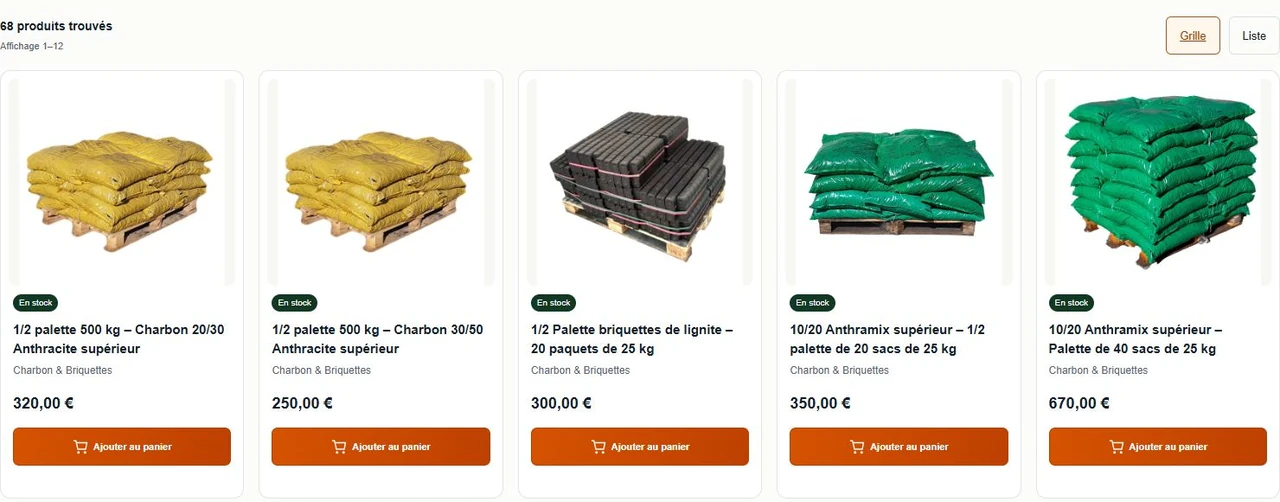
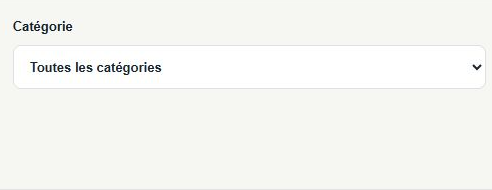
The category selector sits alongside price and availability controls. The Shop also displays sorting, grid/list views and a result count.
Unmodified detail from the same Shop capture.
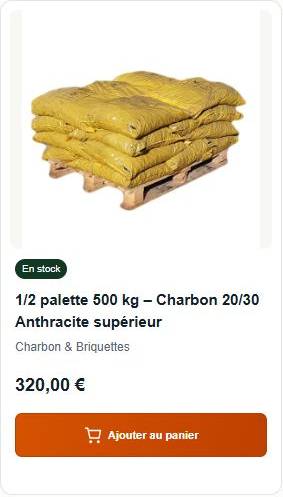
02 / CLEAR COMMERCIAL INFO
A real product, at reading size
Image, name, category, displayed stock label and price stay together inside the production card.
03 / PATH TO PRODUCT DETAIL
The product image and title link to the individual product page, while the card also presents its shopping action.
A Product-First Grid
The catalogue keeps real product imagery, names and pricing at the centre of the browsing experience, allowing customers to scan multiple options without unnecessary interface noise.
Structure Around Discovery
Category and catalogue controls help organise the product range so customers can move through the store with a clearer sense of where they are and what they are viewing.
Commercial Information at a Glance
Key product information is surfaced at browsing level so customers can make an initial comparison before opening a full product page.
From Browsing to Evaluation
The Shop is designed as a transition point rather than an endpoint: once a relevant product is identified, the journey continues into the detailed product experience.
A Consistent Responsive Catalogue
The product-discovery hierarchy remains clear across screen sizes, keeping products and purchasing context usable beyond desktop.
The goal was not to show more products at once. It was to make the right product easier to find.
PRODUCT DETAIL EXPERIENCE
Turning Product Information Into Purchase Confidence
The product page is where discovery becomes evaluation.
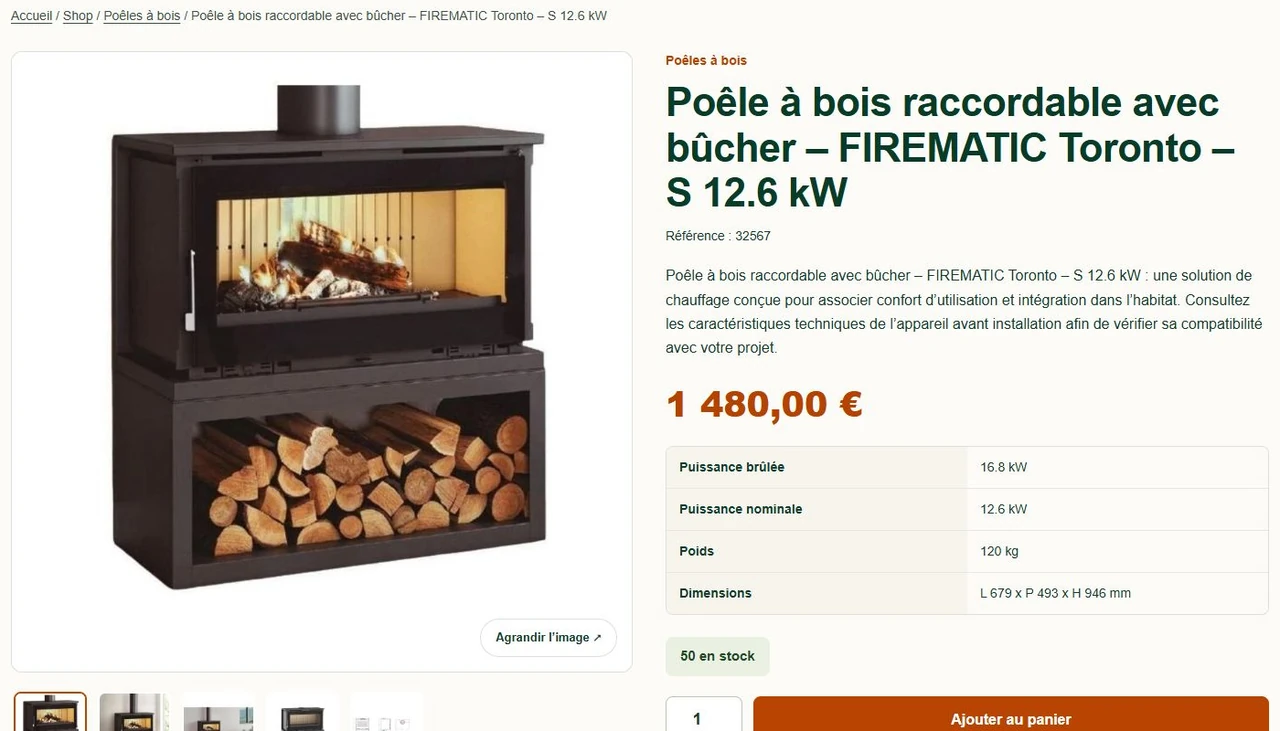
For DENVA FOREST, the experience needed to bring product imagery, pricing, essential information and purchasing actions into a clear hierarchy — giving customers enough context to understand the product without making the page feel difficult to navigate.

- SeeProduct imagery
- UnderstandTitle + product context
- EvaluatePrice + information
- ActPurchase action
02 / COMMERCIAL HIERARCHY
The essentials, in one view
2x Palettes · Bûches de 33 cm · 270,00 €03 / DECISION INFORMATION
Details that support the decision
Chêne blanc, hêtre, charme · 33 cm · 2 palettes04 / PURCHASE ACTION
A clear step from evaluation to action
Quantity and Ajouter au panier remain together.Product First
Large real product imagery gives customers an immediate visual understanding of what they are evaluating, keeping the product itself at the centre of the experience.
Clear Commercial Hierarchy
Product name, pricing and purchasing actions are positioned with a clear hierarchy so the key commercial information can be identified quickly.
Information for Evaluation
Supporting product information provides the context needed to move from initial interest toward a more informed purchasing decision.
A Visible Next Action
The purchase action remains a clear part of the product experience, creating a direct route from evaluation into the cart journey.
Connected to the Wider Store
The product page remains visually and structurally connected to the catalogue, ensuring that moving from Shop to Product feels like one continuous experience.
A strong product page does not simply display information. It helps customers understand what they are buying and what to do next.
CART EXPERIENCE
A Clear Review Point Before Checkout
The cart gives customers a focused moment to review what they have selected before moving into checkout.
Product details, quantity, pricing and order totals are brought together in one clear view, keeping the transition from product selection to purchase simple and understandable.

- SelectProduct chosen
- ReviewProduct + quantity
- ConfirmPricing + total
- ContinueCheckout
01 / PRODUCT CONTEXT
Recognise the selection
The product image, French title and reference identify the item being reviewed.
02 / QUANTITY & PRICING
Review the amount
Quantity 1 · Unit price 300,00 € · Line total 300,00 €
03 / ORDER SUMMARY & CHECKOUT PATH
Confirm, then continue
The total and Passer la commande action share a clear summary area.
Selected Product in Context
The cart keeps the chosen product visible so customers can confirm what they are purchasing before progressing.
Quantity Within Reach
Quantity controls remain part of the review experience, allowing customers to understand and adjust their selection before checkout.
Clear Price Summary
Product pricing and the cart total are presented with a strong commercial hierarchy so the financial summary is easy to identify.
A Direct Next Step
The checkout action is clearly separated from supporting cart controls, giving customers an obvious route forward once the order has been reviewed.
Continuity From Product to Checkout
The cart maintains the same visual and interaction language as the rest of the storefront, helping the purchasing journey feel continuous rather than fragmented.
The cart acts as a checkpoint — enough information to review the order, without creating another layer of complexity.
CHECKOUT EXPERIENCE
Keeping the Final Purchase Step Clear and Focused
Checkout brings customer information, order details and payment choice into the final stage of the purchasing journey.
The DENVA FOREST experience keeps these elements within a structured flow so customers can understand what information is required, review what they are ordering and see the next action clearly.

- 01Details
Customer information
- 02Review
Order context
- 03Payment
Choose the available method
- 04Place order
Complete the checkout step
A Structured Information Flow
Vos coordonnées
Customer and billing information is organised into a clear form hierarchy, helping the final purchasing step remain understandable even when multiple details are required.
Clear Required Information
Téléphone * — required in the current production interface
Required fields are presented explicitly so customers can identify the information needed to continue.
Order Context Remains Visible
Récapitulatif de votre commande
The checkout keeps the order summary within the purchasing context, allowing customers to review the commercial details before placing the order.
Payment Choice in Context
Virement bancaire — the available payment method
Payment selection is integrated into the same checkout experience, keeping the transition from order review to payment understandable.
One Clear Completion Action
Commander
The final order action is presented as the natural conclusion of the checkout flow, reducing ambiguity around what the customer needs to do next.
Checkout is where every earlier decision converges — customer details, product selection, order value and payment choice brought into one final, focused step.
PAYMENT EXPERIENCE
Making Bank Transfer Clear Beyond the Checkout
For bank-transfer payments, placing the order is only one part of the journey.
Customers also need to understand how to complete the payment, which reference to use and what happens after the order has been submitted.
The DENVA FOREST flow keeps those next steps connected to the checkout experience so the customer is not left without direction after choosing bank transfer.
Virement bancaire Bank Transfer (BACS)
Select Bank Transfer
The customer selects the available Virement bancaire payment option within the checkout flow.
Place the Order
Once the checkout information has been reviewed, the customer can submit the order using the selected bank-transfer method.
Receive the Order Reference
The resulting order number provides the customer with the reference needed to identify the payment.
Follow the Transfer Instructions
The post-order experience provides the information required to continue with the bank transfer, keeping the payment instructions connected to the order context.
Use the Correct Payment Reference
The dynamic order number remains associated with the order and can be used as the transfer reference.
DYNAMIC ORDER REFERENCE
Référence ou motif à indiquer
Use the order number to connect the transfer with the submitted order.
COPY REFERENCE
Keep the reference within reach
The order reference can be copied for use with the bank transfer. The production action is labelled “Copier le numéro de commande”.
Order creation and payment completion are separate steps. Bank-transfer receipt is checked manually.
The payment experience does not end when the customer clicks the order button. It ends when the customer understands exactly what needs to happen next.
ORDER CONFIRMATION
Closing the Purchase Journey With a Clear Next Step
Submitting an order should not leave the customer wondering whether the purchase was received or what happens next.
The DENVA FOREST post-purchase experience brings confirmation, order context and the relevant next-step information together in one place — extending the clarity of the storefront beyond the checkout itself.

Order received. Bank-transfer payment remains pending until receipt and manual verification.
- 01Order submitted
- 02Confirmation received
- 03Order context available
- 04Next step understood
Immediate Confirmation
The post-order experience clearly signals that the order has been received, giving the customer a defined conclusion to the checkout step.
Order Context in One Place
Relevant order information remains available after submission so the customer can understand the transaction that has just been created.
Payment Context Continues
For bank-transfer orders, the post-purchase experience keeps the required payment context connected to the order rather than forcing the customer to reconstruct the next step independently.
A Clear Reference Point
The order reference remains part of the post-purchase context, helping connect the submitted order with the subsequent payment step.
A Complete Commerce Journey
The experience does not stop at the checkout button. Confirmation completes the customer-facing journey by making the status and next step understandable.
- Homepage
- Categories
- Shop
- Product
- Cart
- Checkout
- Payment
- Confirmation
A completed checkout creates an order. A clear confirmation experience tells the customer what that order means and what happens next.
CATALOGUE IMPLEMENTATION
68 Products Turned Into One Structured Commerce Catalogue
A complete e-commerce platform needs more than polished templates.
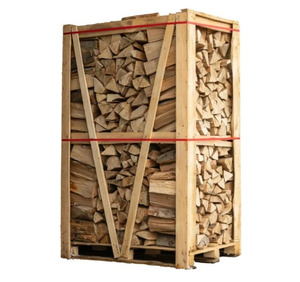
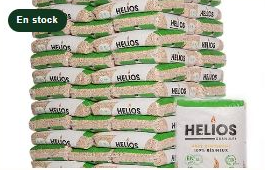
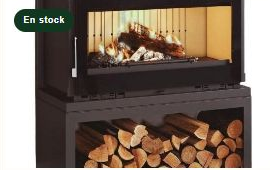
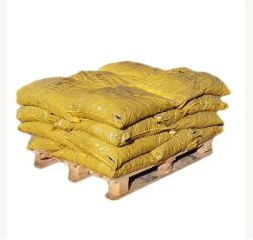
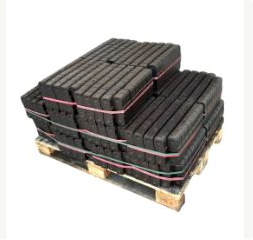
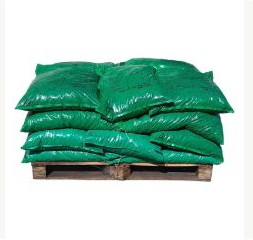
The DENVA FOREST storefront was implemented with 68 final published products, bringing the catalogue into a consistent structure across product imagery, titles, pricing, categories and product-detail experiences.
The result is a real production catalogue designed to work as one connected commerce system rather than a collection of disconnected product entries.
FINAL PRODUCTS
One production catalogue.
Structured. Presented. Published. Ready for commerce.
- Firewood
- Wood Pellets
- Charcoal & Briquettes
- Wood-Burning Stoves
- Pellet Stoves
- Accessories
- 01
Structured Product Organisation
Products were organised within the wider catalogue architecture so customers could move from product families into relevant individual items while remaining inside one consistent storefront.
- 02
Consistent Product Presentation
Product entries follow a shared presentation system, helping imagery, titles, pricing and commerce actions remain visually connected across the store.
- 03
Real Product Content
The production catalogue uses real DENVA FOREST product imagery and commercial content rather than placeholder products created only for the interface.
- 04
From Catalogue To Product Detail
Each product entry forms part of the wider discovery journey:
Category → Shop → Product
allowing catalogue browsing to continue naturally into detailed product evaluation.
- 05
Commerce-Ready Structure
The catalogue connects directly into the WooCommerce purchasing journey:
Product → Cart → Checkout → Order
so the implemented catalogue is part of the complete commerce flow.
- Real Product
- Category
- Catalogue
- Product Page
- Commerce
The scale was not simply 68 product entries. The work was making those 68 products feel like one store.
RESPONSIVE EXPERIENCE
One Storefront, Intentionally Designed Across Every Screen
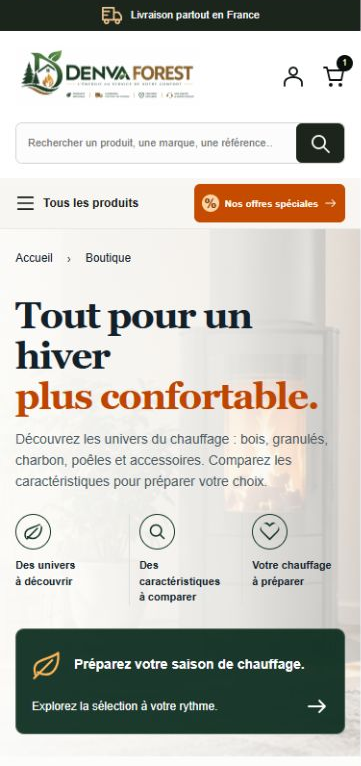
Responsive design for DENVA FOREST was treated as part of the commerce experience, not as a final step of shrinking the desktop layout.
Navigation, product discovery, product information and purchasing actions were structured to remain clear as the available screen space changes — preserving the same shopping journey across desktop, tablet and mobile.
68 PRODUCTS. ONE STOREFRONT. EVERY SCREEN.
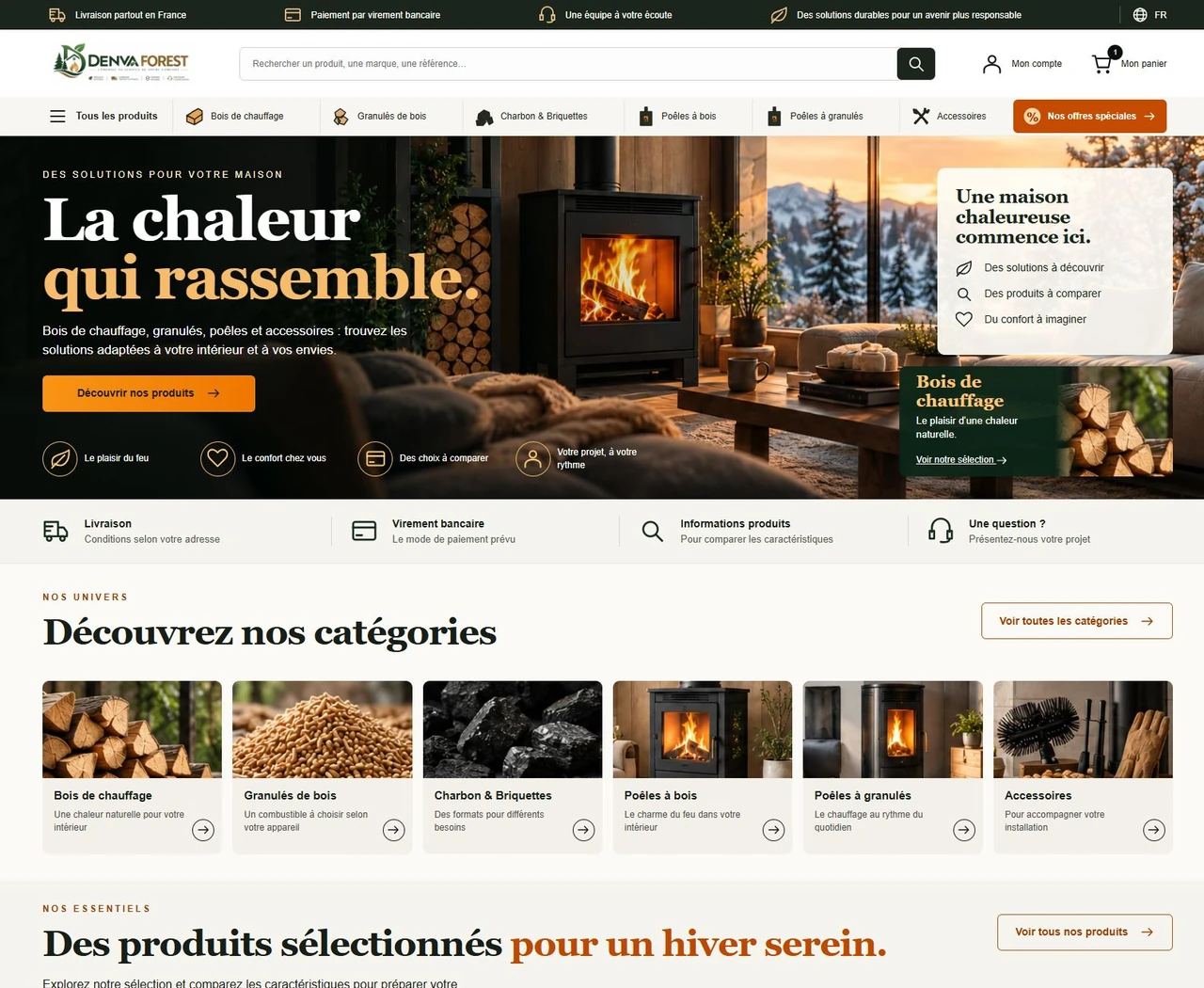
More horizontal space supports a broader composition.
Reduced width calls for a reorganised hierarchy and clear shopping pathways.
A focused vertical flow keeps essential actions clear.
Desktop and mobile production views shown above. Tablet behavior is described here without simulating a production screenshot.
- 01
Hierarchy That Adapts
Content reorganises around the available viewport while preserving the hierarchy customers need to understand each page and identify the next action.
- 02
Products Remain The Focus
Product imagery, titles, pricing and commerce information retain visual priority as layouts become more compact.
- 03
Navigation For Smaller Screens
Navigation adapts to the mobile environment so customers can continue moving through the catalogue without relying on a desktop-sized interface.
- 04
Purchase Actions Stay Clear
Product, cart and checkout actions remain visible and understandable through the responsive journey rather than becoming secondary on smaller screens.
- 05
Checkout Remains Readable
Forms, order information and payment context reorganise for smaller screens so the final commerce stages remain usable without cramped desktop layouts.
SAME JOURNEY. SMALLER SCREEN.
- Discover
- Browse
- Evaluate
- Cart
- Checkout
Responsive design was not about fitting the desktop store onto a phone. It was about preserving the shopping experience when the screen changes.
SEO & DISCOVERABILITY
Building Search Discoverability Into the Commerce Foundation
DENVA FOREST was built with discoverability considered alongside design and commerce.
The objective was to give search engines clear technical and content signals while keeping the storefront structured for real customers — connecting product architecture, page metadata, image context and technical foundations within the same production experience.
One storefront. Built to be understood.
Categories → Product context
Page purpose → Metadata
Alternative text → Image context
Discoverability foundation
Four connected signal layers
- 01Content structure
- 02Page signals
- 03Image context
- 04Technical foundation
Commerce discoverability
Image context, in practice
Conceptual implementation example
- Descriptive filename
- Meaningful alternative text
- Relevant product context
The sampled storefront contains descriptive alternative text, page metadata and WebP imagery. This is a foundation, not an indexing or ranking result.
- 01
Search-Friendly Page Structure
The storefront uses a clear hierarchy across key pages, categories and products, helping important commercial content exist within a structured site architecture.
- 02
Product & Category Context
Product and category experiences provide meaningful page context around the catalogue rather than presenting the store as one undifferentiated collection of products.
- 03
Image SEO Foundation
Product imagery forms an important part of the storefront. Descriptive alternative text and relevant page context connect the sampled production images with the content around them.
- 04
Metadata Foundation
Important storefront pages use page-level metadata to provide search engines with clearer information about the content and purpose of each experience.
- 05
Technical Crawlability
The production setup provides the technical foundation required for search engines to discover and interpret public storefront content.
- 06
Commerce + Search Working Together
SEO was treated as part of the wider ecommerce architecture:
Category → Product → Content → Commerce
rather than as a separate visual layer added after development.
CONCEPTUAL SEARCH MODEL
- Discover
- Understand
- Index
- Connect to relevant content
A model of search discovery; not a claim that every URL is indexed.
The goal was not to design for search engines instead of customers. It was to build a storefront that gives both a clearer understanding of the same content.
MEASUREMENT & GOOGLE ECOSYSTEM
Connecting the Storefront to the Wider Google Ecosystem
Launching the storefront was only one part of the production foundation.
DENVA FOREST was also connected to the Google services needed to support measurement, search visibility and the wider commerce ecosystem — creating a stronger operational foundation beyond the customer-facing interface.
DENVA FOREST / STOREFRONT
Google Tag · Measurement connection
Google Analytics
Measurement foundation
Search visibility
Monitoring foundation
Commerce ecosystem
Foundation
Conceptual service relationships. Merchant Center is presented as foundation work, without approval or live-listing claims.
- 01
Google Analytics
Analytics provides the measurement foundation for understanding how the production website is being used and creates the basis for future ecommerce analysis.
- 02
Google Tag
The production website includes the Google tagging foundation needed to connect supported measurement services with the storefront.
- 03
Google Search Console
Search Console provides the operational connection between the production website and Google's search ecosystem, supporting visibility monitoring and technical search management.
- 04
Google Merchant Center Foundation
The commerce setup includes the foundation required to connect the storefront with Google's product ecosystem.
Measurement foundation
- Visit
- Tagging
- Measurement
- Analysis foundation
Search connection
- Site
- Search connection
- Monitoring foundation
The storefront was built not only to operate for customers, but to connect with the systems needed to measure, understand and expand its digital presence.
DEVELOPMENT & PERFORMANCE
Built as a Production Storefront, Not Just a Visual Prototype
DENVA FOREST was developed as a complete production ecommerce experience using WordPress and WooCommerce with a custom storefront implementation.
The development approach focused on keeping the interface responsive, the commerce journey consistent and the frontend disciplined — supporting a catalogue of 68 final products without turning the experience into a heavy, template-driven storefront.
DENVA FOREST / CUSTOM STOREFRONT
- WordPress + WooCommerce
- Custom theme layer
- Responsive frontend
- Production commerce experience
- 01
Custom WordPress Implementation
The storefront uses a custom WordPress theme approach designed around the DENVA FOREST experience.
- 02
WooCommerce Commerce Foundation
WooCommerce provides the underlying commerce foundation for the catalogue and purchasing journey, while the customer-facing experience is integrated into the custom storefront design.
- 03
Lean Frontend Delivery
The interface was developed with performance discipline in mind, avoiding unnecessary visual complexity and keeping production assets appropriate for their role in the experience.
- 04
Responsive Engineering
Responsive behavior was treated as part of implementation from the start, allowing catalogue, product, cart and checkout experiences to adapt across viewport sizes.
- 05
Optimised Visual Assets
Production imagery is delivered with web performance in mind, including modern image formats where implemented and appropriate asset sizing for the storefront.
- 06
Production Qa
The completed storefront was reviewed across the key commerce journey to ensure the experience remained coherent from discovery through order confirmation.
PERFORMANCE DISCIPLINE
- Custom UI
- Lean frontend
- Optimised assets
- Responsive delivery
- Production experience
WebP imagery and explicit image dimensions are present in the sampled production page. No numeric performance score is presented.
QUALITY REVIEW SCOPE
- Desktop
- Tablet
- Mobile
- Commerce journey
- Production
The technical goal was simple: keep the commerce experience custom, maintainable and fast enough that the implementation never gets in the customer's way.
PROJECT OUTCOME
From a Product Catalogue to a Complete Production Commerce Experience
DENVA FOREST became more than a collection of product pages.
LogicStack Software delivered a connected French ecommerce experience spanning product discovery, catalogue navigation, detailed product evaluation, cart, checkout, bank-transfer payment guidance and post-order confirmation — supported by a responsive custom WordPress and WooCommerce implementation.
ONE STOREFRONT.
ONE CONNECTED COMMERCE JOURNEY.
- 01
Production Storefront
A complete customer-facing ecommerce experience deployed for the DENVA FOREST brand.
- 02
68 Final Products
A real production catalogue implemented with 68 final published products.
- 03
6 Core Product Families
A structured catalogue spanning the six established product families used throughout this case study.
- 04
End-to-End Commerce Journey
Homepage → Categories → Shop → Product → Cart → Checkout → Payment → Confirmation
- 05
Custom WordPress Experience
A custom storefront implementation built around WordPress and WooCommerce.
- 06
Responsive Commerce
The shopping experience was structured for desktop, tablet and mobile rather than treated as a desktop-only interface.
- 07
Search & Discoverability Foundation
SEO, content structure and image context were considered within the production implementation.
- 08
Google Ecosystem Foundation
The production setup was connected to the verified Google measurement/search ecosystem covered earlier in the case study.
- Discover
- Browse
- Evaluate
- Cart
- Checkout
- Pay
- Confirm
Bank-transfer payment follows the order instructions; confirmation does not imply payment has cleared.
DENVA FOREST · Complete commerce experience
- Client
- DENVA FOREST
- Market
- France
- Industry
- Heating & Home Energy
- Platform
- WordPress + WooCommerce
- Development
- Custom WordPress Theme
- Catalogue
- 68 Final Products
- Product structure
- 6 Core Product Families
- Experience
- Responsive E-Commerce
- Payment experience
- Bank Transfer / Virement bancaire
- Delivery
- Production Website
The result is a storefront where product discovery, commerce and technical foundations work as one connected experience — built for real customers, real products and real transactions.
Designed and developed by LogicStack Software.
Visit DENVA FOREST ↗ (opens in a new tab)BUILD YOUR NEXT COMMERCE EXPERIENCE
Need an E-Commerce Platform Built Around Your Business?
From product architecture and custom storefront design to checkout, technical SEO and production deployment, LogicStack Software builds commerce experiences around the way your business actually works.
DENVA FOREST · French E-Commerce Platform · Built by LogicStack Software